Introduction
Today, I’m sharing the best hydrating conditioners for damaged hair, based on my own routine. Since I colour my hair regularly, wash it daily, and use heat tools often, my hair takes a fair amount of damage on a consistent basis.
I consider hydrating products a smart beauty investment; they help prevent breakage and hair loss while adding shine so hair doesn’t look dull or lifeless. If you’ve read my blog before, you know I usually lean toward hair masks, so be sure to check out that post too. One product that’s earned a permanent spot in my rotation lately is the Innersense Organic Beauty Innersense Hydrating Cream Conditioner, and I’ll explain why below.
That said, I’ve brought conditioners back into my routine over the past year, mainly because they’re more affordable and easier to travel with. I hold my products to a high standard, and the ones below are the few that have genuinely made a difference, hydrating my hair and helping restore its strength.
Salon-Quality Hydrating Conditioners for Damaged Hair
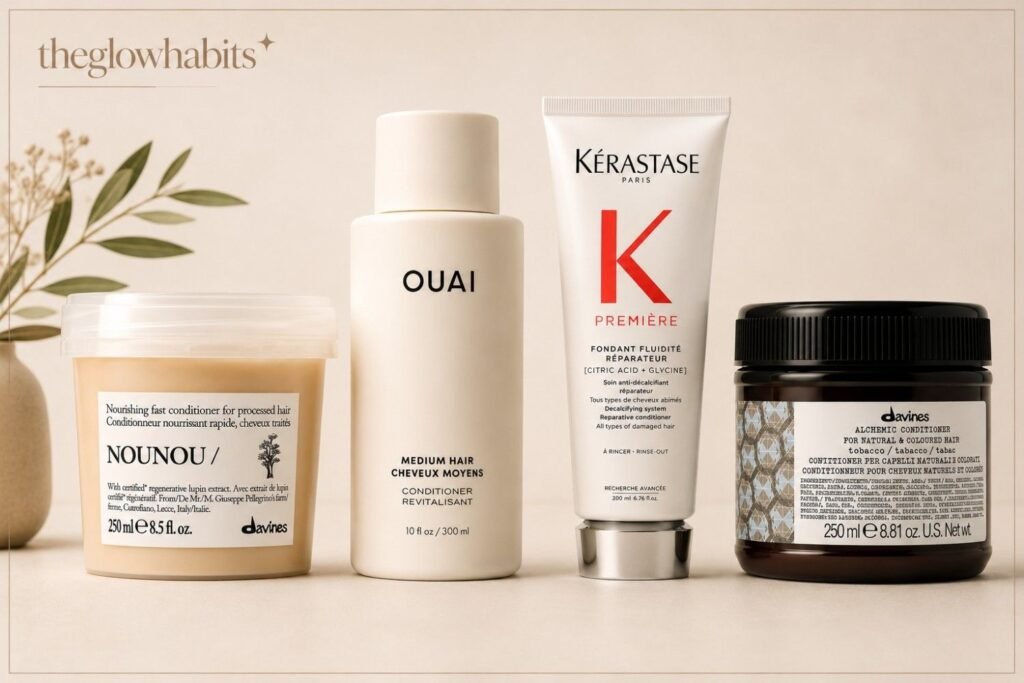
Davines Nounou Nourishing Conditioner
I used this conditioner for years before switching to my Ouai hair mask, and honestly, I still think about going back. The formula is thick but absorbs quickly, leaving hair feeling soft without any heaviness.
It’s worth every penny, especially if your ends run dry. The scent is light and fresh rather than overly sweet, and you only need a small amount per use. It’s also available on Amazon, so you don’t need a salon trip just to restock.
Ouai Medium Conditioner
I wasn’t sure this would compare to my favourite hair mask, but it’s become one of my favourite everyday conditioners: simple, reliable, and easy to fit into a routine. Unlike the Davines Nounou, this comes in a bottle that’s much easier to find, with wide availability at Ulta, Target, Amazon, and Sephora. That makes restocking far less stressful.
The scent is subtle rather than overpowering, so it works well even for fragrance-sensitive users. It glides through tangles when I finger-comb in the shower, leaving hair hydrated and shiny. There’s also a fine version for finer hair types, though it can be harder to find in stock; the medium version still works well without weighing hair down.
Kérastase Première Repairing Conditioner for Damaged Hair
At $48 a bottle, this is a splurge, but if you only wash once or twice a week or need serious repair after bleaching or colour correction, it earns its price tag. I reach for it when my hair feels genuinely overworked. It goes beyond softness, adding deep hydration, reducing damage, and noticeably improving the feel of stressed strands. I use it right after highlighting appointments, when my hair needs the most care.
It’s part of a larger system, and I also like the matching shampoo, though I use it sparingly since the full line is a bit of a luxury for my budget. I often recommend it to friends living in colder climates, where dryness tends to worsen breakage.
Davines Alchemic Conditioner
For damaged hair, I always recommend a toning conditioner over a toning shampoo. You get the same colour-correcting benefits, but conditioners tend to be gentler and more hydrating. The Davines Alchemic Conditioner is my top pick when I want to tone and hydrate at the same time.
I switch between purple-based and blue-based shades, and this one strikes a nice balance between the two. It brightens hair without leaving a purple tint or causing extra damage. The scent leans slightly powdery for my taste, but it fades quickly and never feels overpowering.
Best Clean-Beauty Hydrating Conditioners for Damaged Hair
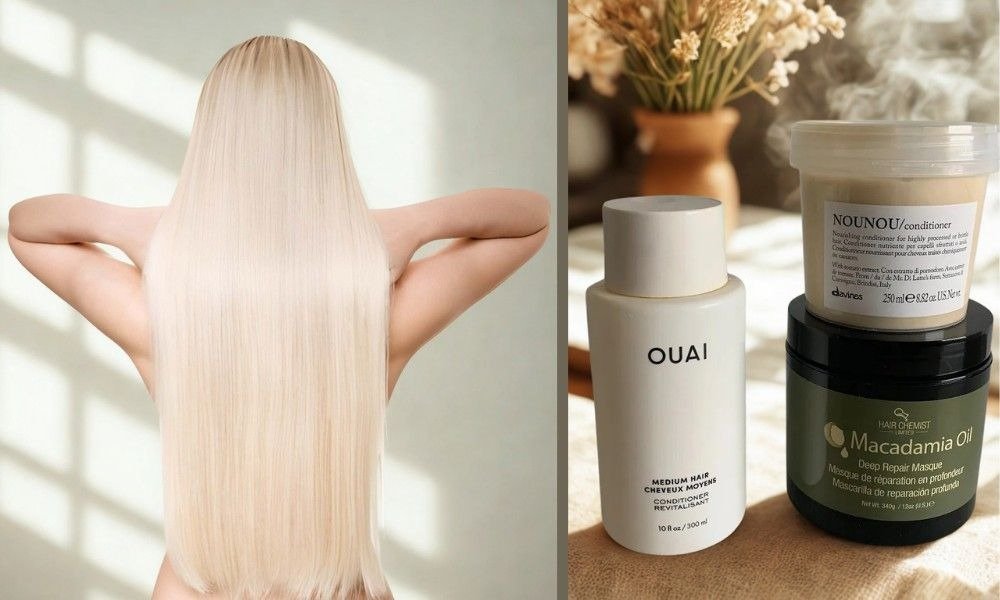
Innersense Organic Beauty Innersense Hydrating Cream Conditioner
If you’re after a clean-beauty option that still feels genuinely rich, the Innersense Organic Beauty Innersense Hydrating Cream Conditioner is one I keep coming back to. It’s made with organic, plant-based ingredients, so it feels like a gentler choice for everyday use without sacrificing the deep hydration my damaged ends need.
The cream texture melts into hair easily and leaves it feeling soft and bouncy rather than coated. I’ve noticed less frizz and more shine after just a few washes, and it works especially well on the mid-lengths and ends where my hair takes the most damage from colouring and heat styling. It’s a bit of an investment compared to drugstore picks, but for clean, sustainably minded hair care, it’s well worth having in the rotation.
Amika The Kure Bond Repair Conditioner
I’ve been drawn to repair-focused hair care for years, and this conditioner is one of the few that genuinely helps stressed hair. I pair it with the Kure shampoo when damage is more noticeable, and the combination helps keep breakage under control.
It delivers deep hydration along with real softness and shine. It won’t make split ends disappear, but it smooths them and leaves strands feeling sleeker overall. What stood out most is how it repairs without weighing down finer sections. It also rinses out easily, so you’re not stuck standing under the water longer than necessary.
The scent is excellent, and I’ve got compliments while using it. Since it’s clean beauty-certified, it also feels like a safer choice for regular use. On value, it’s priced fairly for what it delivers, and I’m happy to keep it in rotation.
One thing to note: if you’re expecting an instant transformation, this is more about steady, gradual investment than an overnight fix.
K18 Damage Shield Protective Conditioner
K18 sits on the pricier end, but the results are strong enough to justify the cost when hair needs fast repair. This damage-shield protective conditioner is pH-balanced to reduce frizz and restore hydration. It smells great, and a little goes a long way, which makes it feel like a worthwhile investment.
I wash my hair a few times a week, and it keeps my hair smooth in between washes. It is on the expensive side, so subscribing on Amazon for a 5–10% discount is worth considering if you plan to use it consistently.
Best Affordable Hydrating Conditioners for Damaged Hair
Hair Chemist Macadamia Oil Deep Repair Masque
This is technically a hair mask rather than a conditioner, but it deserves a spot here for delivering great results on a budget. At under $12, it’s my go-to whenever my ends feel dry.
I’ve repurchased this product more than 20 times over the years simply because it consistently works, performing just as well as pricier alternatives in my routine. It’s rich, so if you have very fine or thin hair, it may feel like a bit much. On thicker hair, though, it leaves strands noticeably softer without any coated or greasy feeling.
Herbal Essences Hello Hydration Conditioner
Among true drugstore conditioners, this is the best one I’ve tried for a quick softness boost.
I used it constantly growing up, and it’s still my backup whenever I forget to pack my usual conditioner. Unlike some drugstore options that only hydrate on the surface and leave behind a filmy residue, this one delivers real hydration. The scent is fresh without being overpowering, and it’s light enough for fine hair.
FAQS
Look for conditioners with nourishing ingredients like keratin, argan oil, shea butter, or coconut oil. These ingredients help repair the hair cuticle, restore moisture, and reduce breakage.
A moisturising formula designed to hydrate and soften strands works best. Look for ingredients like natural oils, glycerin, and proteins that lock in moisture and improve texture.
For very dry hair, choose a deep moisturising conditioner with rich ingredients such as shea butter, avocado oil, or hyaluronic acid. These formulas provide intense hydration and help restore elasticity.
Conditioner can’t permanently fix split ends, but it can smooth and strengthen hair, reducing the visible signs of damage. Regular conditioning paired with routine trims keeps hair healthy.
Yes, moisturising conditioners formulated for colour-treated hair help maintain hydration while protecting colour from fading. These are usually sulphate-free and use gentler conditioning ingredients.
Heavier conditioners can weigh fine hair down. If you have fine hair, opt for lightweight formulas and focus application on the mid-lengths and ends rather than the scalp.
Giovanni 50:50 is known for balancing moisture and strength. It hydrates dry hair while staying lightweight, making it a good option for those who want moisture without heaviness.
It hydrates hair while soothing the scalp, using natural ingredients that moisturise strands and support overall scalp health.
Reverie conditioners use botanical ingredients that nourish and strengthen hair, helping improve softness, reduce dryness, and support healthier-looking strands overall.
Conclusion
The right hydrating conditioner can restore moisture, reduce breakage, and leave damaged hair feeling softer and healthier. Whether you go for a salon-quality formula, a clean-beauty pick like the Innersense Organic Beauty Innersense Hydrating Cream Conditioner, or a budget-friendly option, consistent hydration and gentle care are what will keep your hair looking smooth, shiny, and strong over time.