
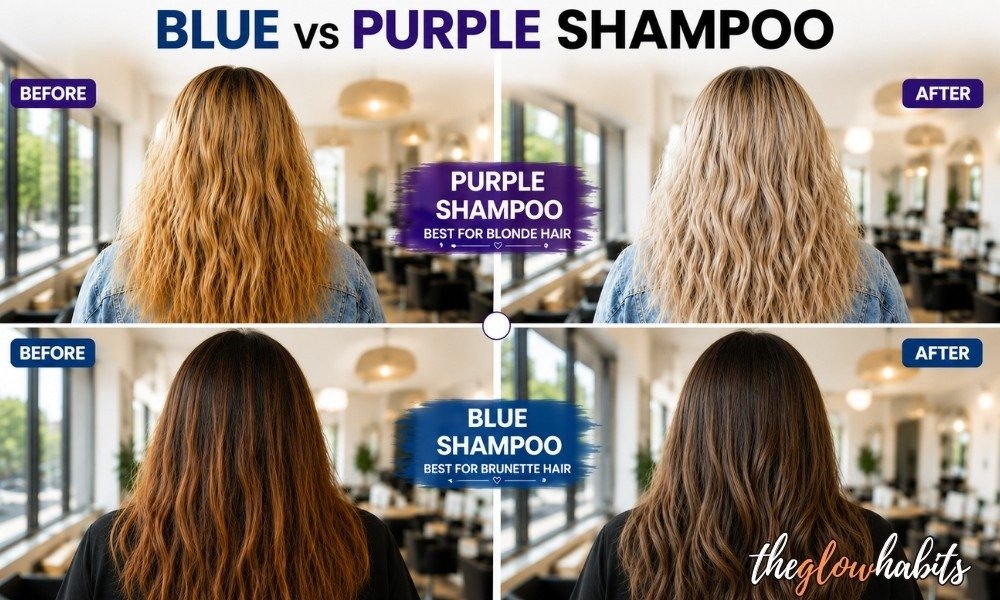
Ask anyone who colours their hair regularly and you’ll hear the same question over and over: blue or purple? After years of working with colour-treated hair, I can tell you that grabbing the wrong one doesn’t just fail to help; it can genuinely undo weeks of toning work.
The difference between blue and purple shampoo comes down to more than just which bottle looks prettier on your shelf. Your hair type, how brassy your colour has turned, and what tone you’re actually trying to fix all determine which one belongs in your shower.
Here’s the short version: both are toning shampoos, but they neutralise opposite problems. Purple cancels yellow. Blue cancels orange and red. Get that backwards and you’ll spend weeks wondering why your toner “isn’t working”.
Quick answer:
If your hair (typically blonde, highlighted, or grey) is turning yellow, reach for purple. If your hair (typically brunette or dark and colour-treated) is turning orange or red, reach for blue.
Quick Comparison
| Features | Purple Shampoo | Blue Shampoo |
| Cancels | Yellow tones | Orange and red tones |
| Best for | Blonde, platinum, highlighted, grey hair | Brunette, dark brown, dark highlighted hair |
| Color wheel logic | Opposite yellow | Opposite orange |
| Feel | Generally gentler, more hydrating | Can be stronger; pair with a rich conditioner |
| Results | Visible after 1–2 washes | Visible with consistent use |
| How often | 1–2x per week | 1–2x per week, less if hair feels dry |
Blue vs Purple Shampoo: What’s the Difference?
Two Toners, Two Different Jobs
Purple shampoo is the go-to for blondes for a simple reason: its violet pigment sits opposite yellow on the colour wheel, so it neutralises yellow undertones and cancels brassiness on contact. In my experience, even one wash can visibly brighten blonde hair after a colour service.
Blue shampoo gets less attention, but it deserves more. Its blue pigment sits opposite orange on the colour wheel, targeting orange and red undertones common in brunette hair. If your colour looks warmer after heat styling, blue is the fix.
These two products aren’t interchangeable. Purple is built for light hair colours; blue is built for brunette and dark hair. Using one in place of the other typically just leaves you with brassiness you can’t explain.
How to Tell Which One You Need
The fastest way to figure out which shampoo fits your hair is to look at what your colour is actually doing between salon visits:
- Turning yellow or brassy-gold? That’s a purple problem common in blonde, platinum, and highlighted hair.
- Turning orange, copper, or reddish? That’s a blue problem common in brunette and dark, colour-treated hair.
I’ve used both back-to-back on clients, and the difference in outcome is immediate once you’re treating the right tone. Overusing either one, though, can overcorrect your colour, so start with a short application time (two to three minutes) and build up rather than leaving it on too long from the start.
How Often Should You Actually Use It
This is where most people either overdo it or don’t do enough. As a general rule, one to two washes a week is the sweet spot for both blue and purple shampoo, enough to keep brass at bay without stripping natural oils or overcorrecting your tone into an ashy or purple-grey cast.
A few things change that baseline:
- Freshly bleached or lightened hair tends to grab pigment fast, so you may only need it once a week at first. Using it more can push blonde hair toward a lavender tint.
- Naturally coarse or dry hair should lean toward the lower end too, and always follow with a moisturising conditioner the same day.
- Hair that processes brass quickly (common with hard water or frequent heat styling) can handle two to three washes a week without issue.
- Grey hair usually does well with purple shampoo twice a week, paired with a hydrating mask at least once in that same window.
The easiest way to dial this in is to watch your hair over two weeks. If brass creeps back before your next wash, add a session. If your colour starts looking flat, dull, or slightly purple/blue-tinted, cut back.
What to Look for on the Ingredient Label
Not all toning shampoos are built the same, and the ingredient list tells you a lot about how a formula will actually behave on your hair.
- Pigment source matters most. Look for shampoos that list violet or blue pigments (sometimes shown as ‘colour additives’ like Blue 1 or Violet 2) fairly high on the ingredient list; that’s what determines how strong and how fast the toning effect will be.
- Sulphates are worth checking for if your hair is already dry or damaged. Sulphate-based cleansers strip colour and moisture faster, which can work against you if you’re also trying to tone down brassiness. A sulphate-free formula is gentler and better for hair that’s already been through bleach or repeated colour services.
- Hydrating additives like argan oil, shea butter, or keratin help offset the drying effect that pigmented shampoos can have with regular use. These are especially worth prioritising in a blue shampoo, since blue formulas tend to run slightly stronger than purple ones.
- Protein or bond-building ingredients (like the kind found in bond-repair treatments) are a nice bonus for chemically treated hair, since toning shampoo alone doesn’t repair structural damage; it only manages colour.
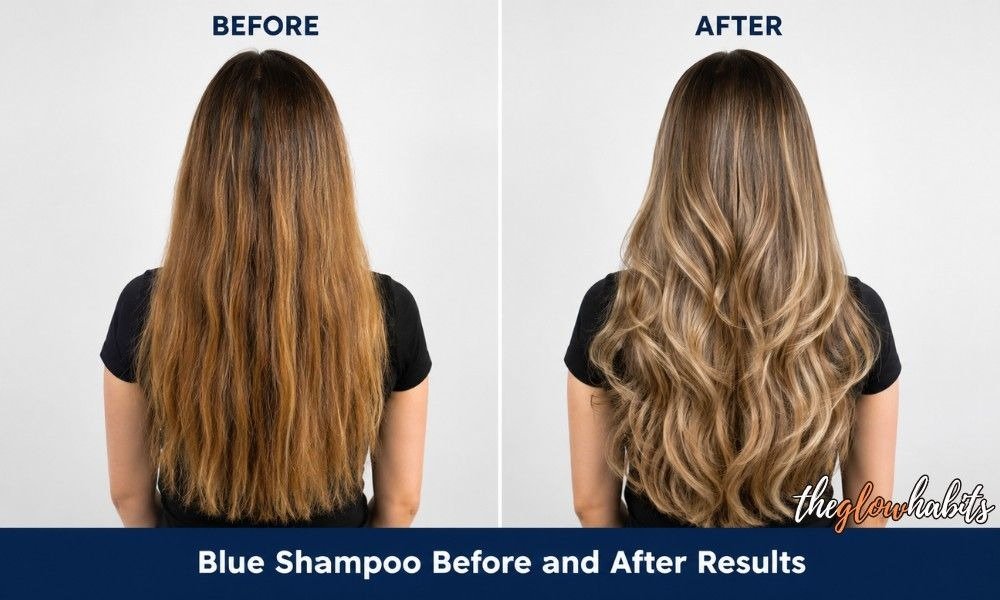
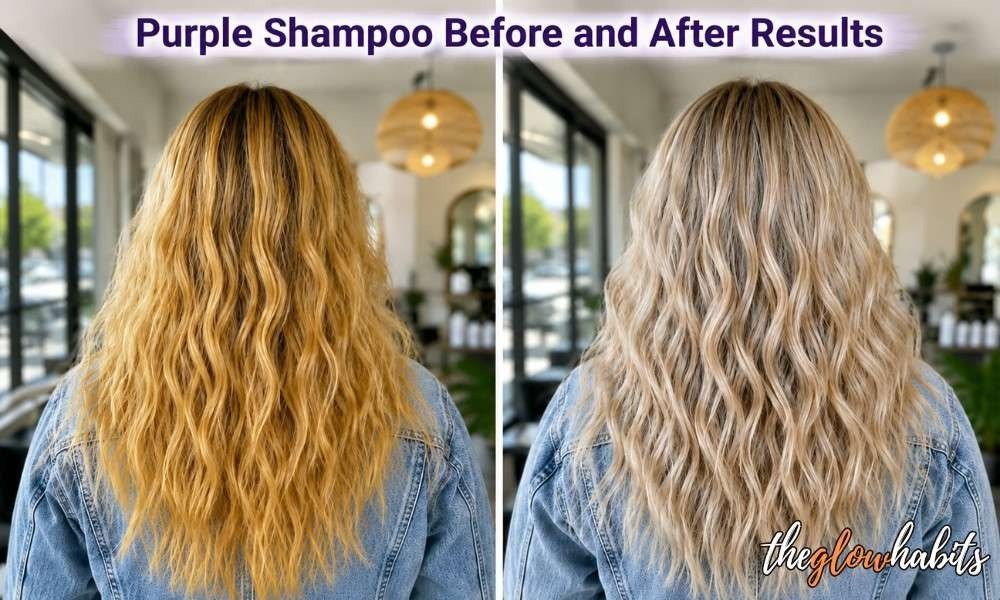
Blue vs Purple Shampoo: Before-and-After Results
Which is better for colour-treated hair?
Blue shampoo is a newer category; it’s only gone mainstream in the last few years, but the formulas available now are far more refined than early versions. Purple shampoo, on the other hand, has been the default for longer, and purple formulas tend to be gentler and more hydrating overall. Hair that’s already prone to breakage or split ends usually responds better to purple than to a stronger blue formula.
Blue shampoo works well on dark or subtly highlighted hair carrying deep brass tones, but using it on hair that’s just been heavily bleached without following up with a hydrating conditioner is where people run into trouble. If your hair has recently been through a damaging colour process, check how it’s holding up before reaching for the stronger option, and always follow with a rich conditioner regardless of which toner you use.
Which Is Better for Grey Hair?
Blue shampoo is rarely the right call for grey hair. Grey tends to pick up yellow rather than deep orange, so blue is solving a problem your hair probably doesn’t have. Purple is the better fit here. Grey hair tends to be wiry and prone to frizz, and a good purple shampoo lifts that yellow cast while leaving strands looking cleaner and brighter. The bigger risk with grey hair isn’t which toner you pick; it’s drying formulas in general.
Grey hair loses moisture fast, so pair whichever shampoo you use with a conditioner or deep mask at least once a week. Skipping that step is where grey hair starts looking rough and dull, regardless of the toner.
Best Purple Toners for Blonde and Grey Hair
UNITE Hair BLONDA Purple Shampoo
My first reach for cancelling yellow and brass without harshness. It’s sulphate-free, paraben-free, and colour-safe; rinses clean without residue; and won’t stain your hands or shower walls the way some stronger formulas do.
A toning conditioner rather than a shampoo, but it earns a permanent spot in blonde routines. The pigment is intense enough to shift tone in a single use, and it layers well after a purple shampoo step for extra shine and hydration.
Kristin Ess One Purple Conditioner
The budget pick that doesn’t feel like a compromise. It’s gentle enough for regular use and works well as a toning step on days you don’t want a full shampoo routine.
Fanola No Yellow Shampoo
A cult favourite among stylists for a reason: it’s a strong, fast-acting formula that works well on very brassy or previously bleached hair. Because it’s potent, this one is best used once a week rather than as a daily driver.
Redken Color Extend Blondage
A slightly more hydrating alternative to stronger drugstore formulas, built specifically for colour-treated blonde hair that also needs UV and heat protection. A solid pick if your hair leans dry.
Pairing tip
Follow up with a leave-in conditioner (like 7SECONDS Detangler) for extra hydration and heat protection. Toning shampoos can be drying if used without a follow-up step.
Best Blue Toners for Brunette and Highlighted Hair
Aveda Blue Malva Shampoo
A gentle, hydrating formula that makes highlights pop without stripping the hair. It costs more up front, but the bulk size stretches the price per wash down considerably.
Pureology Color Fanatic Top Coat
Technically a tone-depositing gloss rather than a shampoo, this is a strong pick for dark brown and black hair (level 1–2) that’s picking up brass. It adds shine and softness without requiring a full toning-shampoo routine.
Matrix Total Results Brass Off
A budget-friendly blue shampoo built specifically for brunette hair fighting orange and copper tones after colour services. It’s a solid entry point if you’re testing blue toning for the first time.
Joico Color Balance Blue Shampoo
A slightly stronger formula that works well on dark, cool-toned brunette hair, particularly after balayage or highlights that have started pulling warm.
Pairing tip
Aveda for the wash and Pureology for the gloss finish – together they cover both the toning and the shine step that brunette hair needs.
FAQs
Not in the same wash and generally not on the same hair; they target opposite tones, so combining them can muddy your colour. If you have both blonde and dark sections (like a balayage), alternate instead: purple on blonde pieces, blue on roots or lowlights.
No. Toning shampoos only affect colour-treated or lightened hair; the pigment binds to porous, processed strands. On untreated, natural hair, they typically have little to no visible effect.
This usually means the product was left on too long, used too often, or applied to hair that’s already light enough that it doesn’t need much correction. Cut back to once a week and clarify with a gentle shampoo if the tint doesn’t fade.
It’s not recommended. Daily use of a pigmented shampoo increases the risk of overtoning and can dry out hair faster than a standard shampoo would.
A gentle, sulphate-free formula like UNITE Hair BLONDA or Redken Colour Extend Blondage.
Matrix Total Results Brass Off (budget) or Joico Colour Balance Blue (stronger, cooler tone).
A sulphate-free purple shampoo that tones yellow and hydrates blonde hair needs both.
Conclusion
Purple shampoo fixes yellow tones best for blonde, highlighted, and grey hair. Blue shampoo fixes orange and red tones best for brunette and dark hair. Use the wrong one and you’re just wasting product. Stick to 1–2 washes a week, choose a sulphate-free formula if your hair is already dry, and always follow with a conditioner. Once you know your tone, the choice is simple.






[…] your cue to reach for a purple shampoo or mask rather than waiting for a set day of the week. Here’s my full breakdown of blue vs purple shampoo if you’re not sure which one your ton…. Leave it on for a shorter time than you would for a fully cool-toned blonde; you’re […]