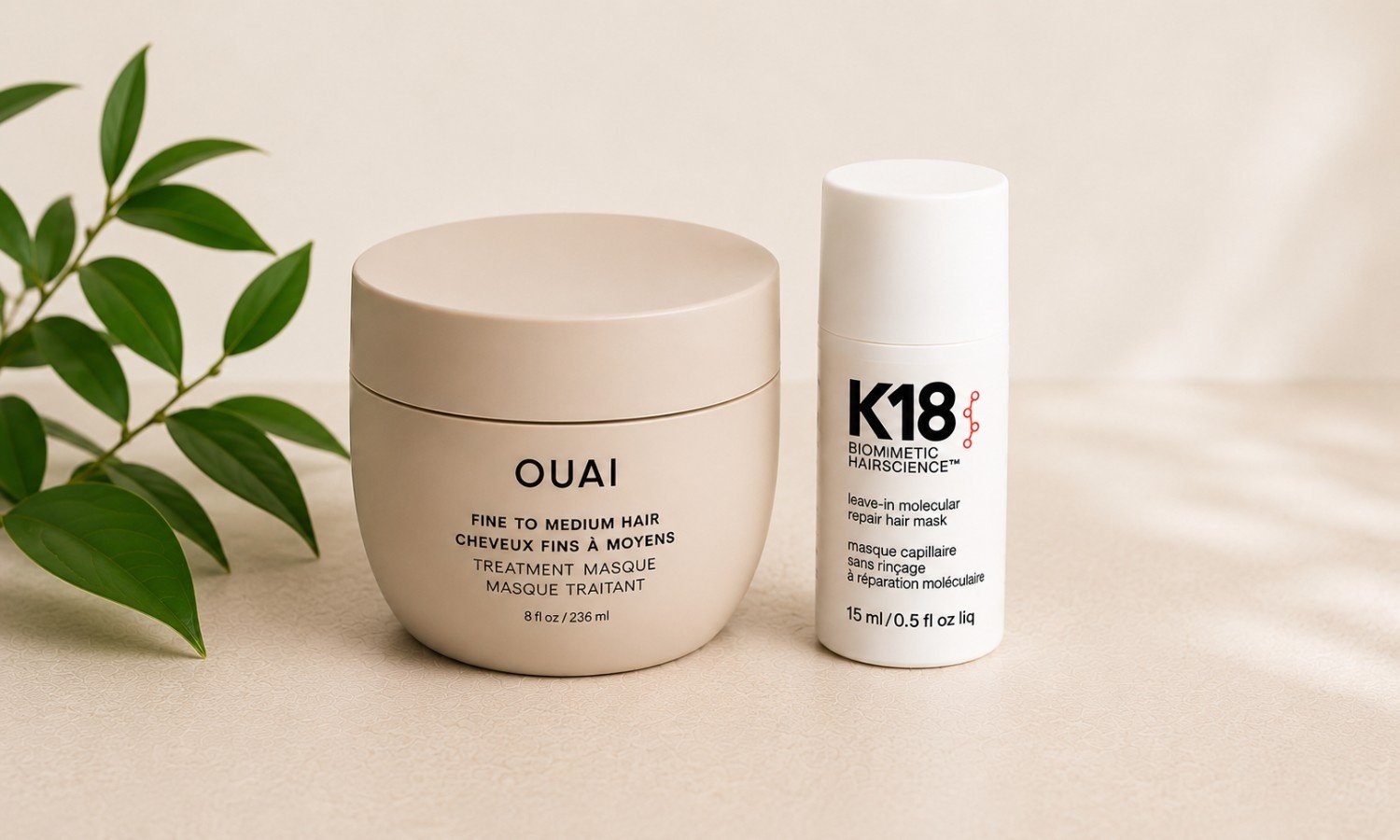
Millions of people with fine, damaged hair keep piling on products and over-investing in styling, still wondering why their strands feel worse each month. I did the exact same thing before I finally stripped back my routine and actually paid attention to what my hair was asking for.
The shift happened when I started using a lightweight hair mask consistently, once a week, with no skipping. Within a few weeks, the breakage slowed down, the shine came back, and my hair started behaving in a way it hadn’t in years.
Fine strands have specific needs that regular conditioning doesn’t address deeply enough. Every wash, heat tool, and tight style chips away at the structure. Restore-focused formulas are the only real way to stop that spiral.
Done right, deep conditioning works beneath the surface to prevent breakage and restore shine without requiring you to overhaul everything, and it supports scalp health too, something most people overlook.
Heat, humidity, and sun hit fine hair especially hard in warmer months, which is exactly when a lightweight mask earns its place with real conditioning without the heavy residue that drags fine strands flat.
You don’t need luxury pricing to get real results either. Whether you’re growing out damage or just maintaining healthy strands, the approach stays the same: prevent what you can and restore what’s already lost. Here’s what’s actually worked, broken down by hair type.
Quick Comparison: Masks by Hair Type
Prices below are approximate street prices at the time of writing (mid-2026) and vary by retailer and size. Always check the current price before buying.
| Product | Best For | Approx. Size | Approx. Price | Key Ingredient |
|---|---|---|---|---|
| Christophe Robin Baby Blonde Nutritive Mask | Blonde, toning | 8.4 oz | ~$53 | Almond butter, buriti oil |
| Clairol Shimmer Lights Conditioner | Blonde, brassiness | 16 oz | ~$15 | Purple pigments |
| Hask Blue Chamomile & Argan Oil Conditioner | Blonde, between-wash leave-in | 12 oz | ~$9 | Blue chamomile, argan oil |
| OGX Coconut Curling Butter | Curly, lightweight hydration | 6.6 oz | ~$8 | Coconut oil, honey |
| Pantene 3 Minute Miracle Deep Conditioner | Color-treated, quick fix | 6 oz | ~$6 | Pro-V complex |
| Kiehl’s Nourishing Olive Fruit Oil Conditioner | Color-treated, hydration | 6.8 oz | ~$24 | Olive fruit oil, avocado oil |
| Oribe Gold Lust Transformative Masque | Color-treated, intensive repair | 5 oz | ~$68 | Plant collagen, biotin |
| Carol’s Daughter Smoothie Deep Conditioner | Coarse, curly, weekly ritual | 8 oz | ~$10 | Shea butter, mango, banana |
| L’Oréal Total Repair Damage Erasing Balm | Fine, structural repair | 6.8 oz | ~$8 | Ceramides, sweet almond oil |
| Briogeo Don’t Despair, Repair! Mask | Beginners, all hair types | 8 oz | ~$38 | Rosehip oil, biotin |
| Hair Chemist Macadamia Oil Deep Repair Masque | Budget, rinse-out or leave-in | 16 oz | ~$10 | Macadamia oil |
Blonde Hair
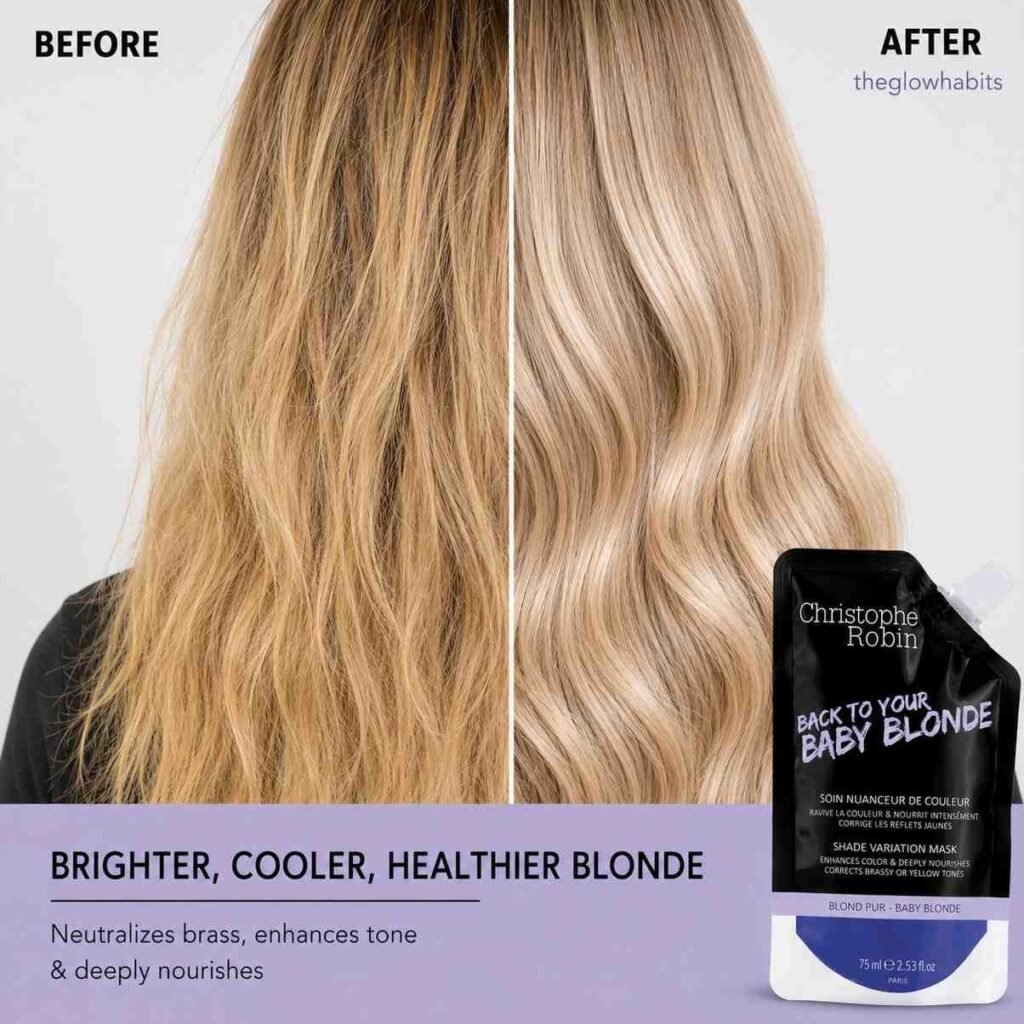
Blonde is one of the most demanding colour commitments you can make. Stretch four months between salon visits and highlights go brassy, roots clash, and nothing looks intentional anymore.
I’ve lived that cycle more times than I’d like to admit, and the fix was never a single product; it was building a small, deliberate routine around what gets lost between appointments. Roots and ends deal with different levels of damage at once, so a lightweight, nutritive mask needs to address both without flattening fine strands a balance most products miss.
The Christophe Robin Baby Blonde Nutritive Mask earns every mention. It’s genuinely nutritive, keeps tone cool without weighing hair down, and delivers a richer finish on highlights. I used it for four months and the results held up.
For a low-cost alternative, Clairol Shimmer Lights is a drugstore staple for good reason; use it as a quick conditioner or a longer leave-in when brassiness digs in. The Hask Blue Chamomile Conditioner also deserves credit at roughly six dollars, it’s gentle enough for between-wash use and keeps streaky results at bay.
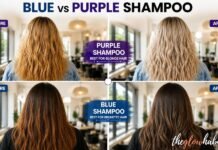
The science: cobalt andpurple sit opposite yellow and orange on the colour wheel, which is why these formulas neutralise brassiness. Timing matters too short does nothing, too long turns highlights murky.
Argan oil isn’t for toning, but it smooths texture afterward without the stiffness heavier masks leave behind. Scent matters too — my first purple mask smelt so harsh I kept skipping it, defeating the purpose. Once I found one that smelt pleasant, I stuck with it, and consistency is what actually holds tone over time.
Layering a leave-in over your toner, rather than choosing one, makes managing fresh roots much easier. It won’t replace a salon visit, but it keeps things looking deliberate, not grown-out.
Curly Hair
Curly hair runs on its own rules it dries out faster and reacts very differently to product weight than straight hair. What works for fine, straight strands can collapse curls entirely, and I learned that the hard way before understanding what my curl pattern needed.
Haircare content online doesn’t help either. Every scroll surfaces a new curl enhancer or rinse-out treatment promising quick definition. I chased a lot of those claims before getting selective. OGX Coconut Curling Butter was one of the few that held up past the hype. The coconut base delivers real conditioning without leaving curls stiff or crunchy, and the softness lasts well into day two.
A couple of Glossier products were slightly disappointing for my curl pattern; they leaned more toward conditioner than mask, without enough structure for what my curls needed. That pushed me toward layering properly. A hydrating rinse-out followed by a lightweight leave-in consistently outperformed any single product on its own Pairing it with a light oil afterward kept curls defined by the next morning.
The rinse-out step is where the real work happens. A mask left on long enough to absorb builds the moisture foundation any curl enhancer applied afterward depends on. The Glossier Lift leave-in works best not as a standalone fix but as a finishing layer once the mask is fully rinsed out adding just enough hold without making curls feel coated or heavy.
Layering a conditioner, mask, and light oil sounds like a lot, but for curly hair it’s the baseline, not a luxury. Deep conditioning isn’t an occasional reset it’s what keeps curl pattern from unravelling between washes.
Colour-Treated Hair
Dyed hair is structurally different. Once bleaching begins, the bonds holding strands together break down — leaving brittle ends, faster colour fade, and hair that loses moisture quicker than it can hold it.
Colour damage doesn’t hit all at once; it’s a slow burn. The first sign is usually that squeaky-clean feeling right after washing which sounds fine until you realise your hair’s been stripped of everything it needed to stay intact.
The Pantene 3 Minute Miracle Hair Mask is the most efficient budget pick I’ve come across in just a few minutes, it leaves dyed hair noticeably softer and shinier without weighing fine strands down.
The Kiehl’s Olive Oil Hair Pack earns its place differently the olive oil base works as a serious hydrating treatment, reaching where colour damage runs deepest, with a post-rinse feel that’s smooth, not slippery.
Then there’s Oribe. The packaging signals something before you’ve even opened it, and the formula lives up to it, delivering real repair that other masks only partially address.
One habit changed everything: applying right after towel-drying instead of onto dripping wet hair. The difference in absorption was immediate.
For colour-treated strands, deep conditioning isn’t optional it’s the baseline that keeps broken ends from defining the whole look. Colour damage responds to consistency more than price; a lightweight mask used weekly will always outperform an expensive jar that only comes out once damage is already in crisis.
Coarse Hair
Coarse hair doesn’t respond to half-measures. Heat, salt sprays, chlorine, and sun stack up on already resistant strands, leaving hair rough no matter what’s layered on top. Unlike fine hair, coarse strands need real time and intensity to shift.
The difference between a forgettable product and an actual turning point often comes down to application. Most people apply a mask onto dripping-wet hair and wonder why results disappoint the product never gets a chance to absorb before it’s diluted. Shampooing first, then applying to damp, not soaked hair, is the baseline that makes everything else work.
Carol’s Daughter Smoothie was the first mask that changed what I thought was possible for coarse, damaged hair. The texture and scent are almost dessert-like gimmicky-sounding until the result proves something real happened.
I treated it as a weekly ritual: a generous scoop, one full hour, letting the process run its course. That extra time was the difference between nourished hair and just conditioned hair the results weren’t even close.
After rinsing, my strands felt genuinely silky not sticky, not heavy, not coated with residue. It’s the feeling of healthy hair you forget is possible once damage has been your normal for too long. Whether I air-dried or heat-styled it afterward, the results held up the same way both times.
For curly or damaged hair that also falls into the coarse category, lightweight masks like this solve a problem heavier, greasier options only create differently hydration lands without the weight coarse hair almost never gets.
The price sits well below higher-end masks promising similar results, making it easy to use consistently rather than rationing it. Finishing with a light mist of rosewater afterward adds a final softening layer that locks in hydration without disturbing the conditioning already in the ends.
Fine Hair
Fine-haired people live by one rule: if the product is too heavy, it’s already failed before the morning begins. One layer too thick, and the whole style collapses the margin is small, and most formulas miss it.
The L’Oréal Total Repair Damage-Erasing Balm earns its name without needing to oversell it. Built around ceramides and sweet almond oil, it works at a structural level for actual repair, not just surface coating.
I first came across it through an offhand mention in a beauty review the kind of understated endorsement that carries more weight than a full campaign. My expectations were modest, but the balm-like texture surprised me from the first use. A single dollop spread evenly from root to tip without any rubbing required the kind of efficiency fine hair responds to best. Over-applying is the one mistake that turns a good mask into a greasy regret.
After rinsing, the almond oil and ceramides left real slip without buildup a soft, unfrizzy curl on wavier sections and a quietly bodied finish on straighter parts. Getting both outcomes from one balm wasn’t something I expected.
A windy commute used to undo everything by mid-morning. Once this balm became a weekly habit, that stopped being something I had to think about my hair held its shape by the end of the day, with natural movement that usually disappears by noon.
The formula doesn’t carry a fake, lingering perfume it’s clean during the rinse, neutral once dry, exactly the goal for a mask meant to disappear into the routine. That balance is what makes it work so well for fine hair: airy enough to feel like nothing, effective enough to function like everything.
The One Hair Mask I’d Recommend to a Beginner
Understanding the difference between daily conditioner and a dedicated mask is the first real shift in fine haircare. Wash frequency decides how often a mask should be used; someone washing daily has different moisture needs than someone washing weekly or monthly.
The Briogeo mask is the best beginner pick; it works across hair types, so you don’t need everything figured out before starting. Hair porosity is what most beginners skip, yet it explains why one mask absorbs beautifully while another just sits there. Low-porosity hair needs warmth and time to open up and absorb moisture; high-porosity hair does the same in half the time.
If you have wavy or straight hair, you’re likely low-porosity; it looks fine on the surface but stays dry underneath. Weekly deep conditioning versus monthly makes a clear difference in how hair falls and holds shape.
After my first proper Briogeo session, the slip was unlike anything from a regular conditioner, and the difference in hair health was visible even before it dried. Starting with sample sizes is a smart move; it lets you test how a treatment responds to your porosity and texture before committing your full budget.
A mask routine doesn’t need to be complicated, just consistent and matched to your hair type. One solid mask used at the right frequency beats cycling through five products with no real routine behind them.
Best Budget-Friendly Hair Masks for Fine, Damaged Hair
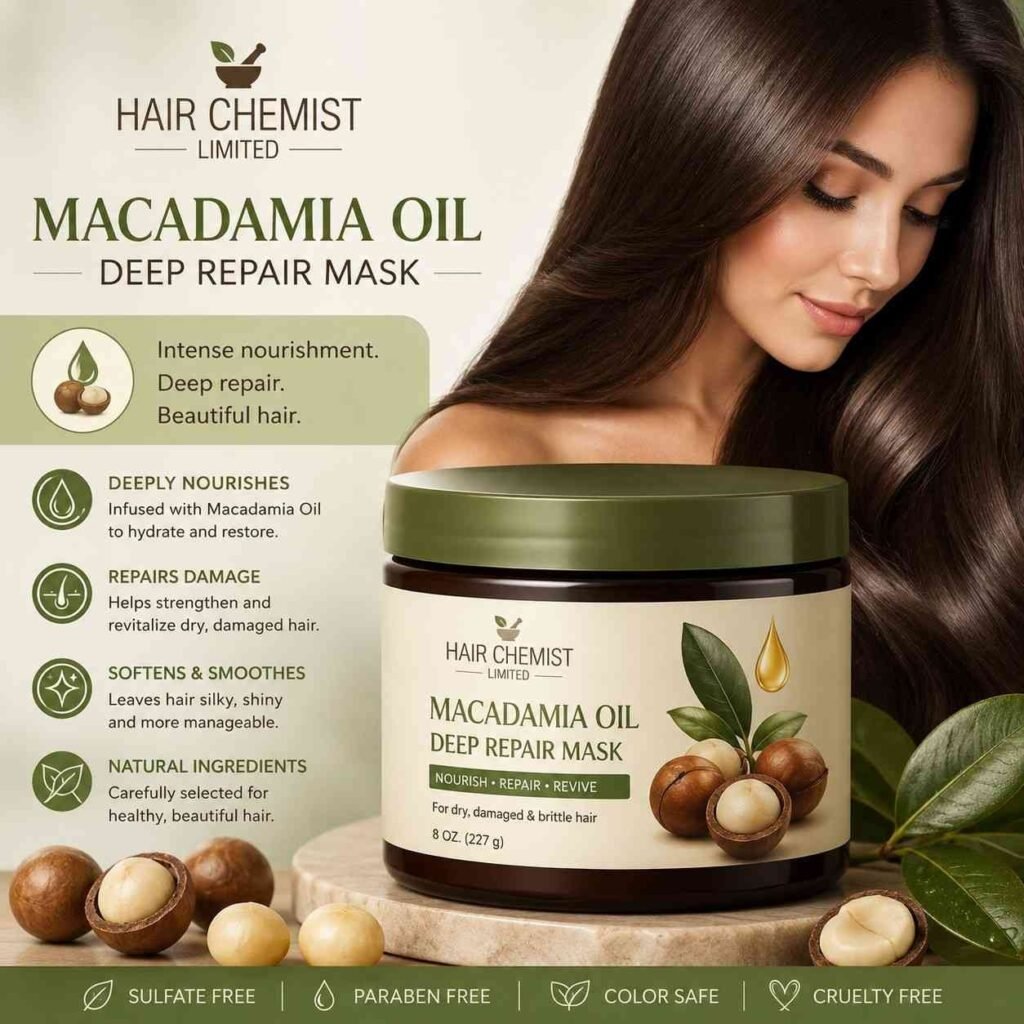
Spending more doesn’t always mean getting more nowhere clearer than in budget haircare. After testing both ends of the price spectrum, the products I keep coming back to aren’t always the ones in elegant packaging.
The Hair Chemist Macadamia Oil Deep Repair Masque is my first recommendation when the budget is tight but the damage is real. At around $10 and easy to find, it removes every barrier to trying it.
I’ve used it well over 20 times across different seasons and damage levels, and the quality has stayed consistent a reliability you wouldn’t expect at this price point.
The macadamia oil base separates it from generic options at a similar price it penetrates rather than coats, so repair happens inside the strand, not as a surface film. It’s thicker than most affordable masks but rinses out cleanly without residue a balance most budget treatments never get right.
For best results, applying it on back-to-back days after heat or chemical damage gives conditioning a real chance to rebuild what’s lost. It also works as either a rinse-out or leave-in most affordable masks lock you into one method, so having both is especially worth it.
Across every affordable mask I’ve used, this one earns its place through pure, repeatable results the kind that makes you quietly stop browsing for something better.
FAQs
A lightweight, protein-and-oil-based masque works best for fine hair, something like the L’Oréal Total Repair Damage-Erasing Balm or a similar ceramide-based formula. Heavy butters and silicone-rich masks tend to weigh fine strands down, so look for “lightweight” or “soufflé” texture labels specifically.
The best deep conditioners for fine hair are ones that add slip and moisture without leaving residue Briogeo and L’Oréal Total Repair are strong picks because they absorb quickly and rinse clean, rather than sitting on the hair shaft.
Top-rated options for dry hair usually combine intensive oils (olive, macadamia, or almond) with longer sit times. Kiehl’s Olive Oil Hair Pack and Hair Chemist Macadamia Oil Deep Repair Masks are both well-reviewed for restoring moisture to dry, dehydrated strands.
Masks for thin, fine hair are formulated to be lighter in texture and lower in heavy emollients, so they condition without flattening volume. Regular masks, especially those made for coarse or curly hair are often too rich and can leave fine hair looking greasy or limp.
Good masks for damaged hair focus on rebuilding the hair’s internal structure, not just softening the surface. Ingredients like ceramides, keratin, and plant proteins do this well. Oribe’s Gold Lust Masque and Carol’s Daughter Smoothie are both built around repair rather than surface shine alone.
Fine curly hair needs hydration without weight, so a rinse-out mask followed by a light leave-in oil works better than an all-in-one heavy butter. OGX Coconut Curling Butter, used sparingly, is a solid option for this combination.
Conclusion
At the end of the day, the right hair mask isn’t about price or packaging; it’s about matching the formula to what your hair actually needs. Blonde hair needs tone correction, curly hair needs weightless hydration, colour-treated hair needs consistency, and fine hair needs restraint. Whatever category you fall into, the biggest shift usually comes not from finding one “miracle” product, but from actually using a mask every single week without skipping.
Start with one solid pick from your hair type, give it a few weeks, and let your strands tell you if it’s working before you chase the next big thing.