Fine hair and heat styling have a complicated relationship. A few years ago, some heat damage from over-styling was enough to make me start taking heat protectant seriously, not just as an extra step, but as something my hair genuinely couldn’t do without. The problem is that most heat protectants aren’t actually designed with fine hair in mind.
If you have fine, straight hair, you know the struggle: most heat protectants are either too heavy, too greasy, or just leave your strands looking flat before you’ve even touched a hot tool. No wonder so many people skip this step entirely.
The good news? There are formulas that protect without the weight-down. Here’s what to look for, how to use it, and which ones are worth your money.
Why Fine Hair Needs a Different Kind of Heat Protectant
Not all heat protectants are created equal, and fine hair is proof of that. Heavy formulas that work beautifully on thick or coarse hair can leave fine strands looking limp, flat, or greasy almost immediately, sometimes before you’ve even finished styling.
This is why mist-based formulas tend to work better than creams for fine hair. A fine mist iljtdig coats the hair without saturating it, so you get protection without the weight. Creams, on the other hand, are easy to overapply, and even a small amount too much can make fine hair feel coated rather than styled.
There’s also the wash-frequency factor to consider. Many people with fine hair stretch out washes for as long as possible, which means whatever product you’re using needs to hold up over several days, not just look good fresh out of the shower. If your go-to shampoo for fine, damaged hair isn’t pulling its weight either, a heat protectant that’s too heavy can make hair look greasy even faster, cutting that stretch even shorter.
What Heat Actually Does to Your Hair
Heat styling doesn’t just change how your hair looks temporarily; it actually alters the hair on a structural level, which is why protection matters no matter what type of hair you have.
When heat is applied, it temporarily breaks the hydrogen bonds within the hair shaft, which is what allows a curling iron or flat iron to reshape it in the first place. Push those temperatures high enough, though, and the effect goes further: research on the chemistry of heat damage shows that once hair crosses a certain heat threshold,
the keratin proteins in the cortex actually begin to denature, losing the strength and elasticity that keep strands resilient. Alongside this, moisture evaporates rapidly from the hair shaft, especially during blow-drying, and repeated moisture loss over time is what leads to dryness, frizz, and brittleness.
A heat protectant works the way an oven mitt does: rather than blocking heat entirely, a chemistry expert’s breakdown of how these products work explains that they slow down and spread out heat penetration, which helps limit moisture loss and protects both the hair’s outer cuticle and its internal protein structure.
Without that barrier, the heat makes direct, unmitigated contact with your strands every single time you style. Whether you’re reaching for a curling iron made for fine, straight hair or any other hot tool.This is true regardless of hair type or texture. Fine hair isn’t more or less vulnerable to this process than thick or coarse hair; it just shows the effects differently, which is exactly why choosing the right formula matters as much as using one at all.
How to Choose the Right Heat Protectant for Fine Hair
With so many formulas on the market, it helps to know exactly what to check for before adding one to your routine, especially since fine hair has less room for error.
Look for a lightweight formula first. This matters more for fine hair than almost any other factor. A heavy product will weigh hair down regardless of how well it protects against heat, so lightweight should be non-negotiable, not just a nice-to-have.
Check the temperature protection level. Most well-formulated heat protectants are designed to protect up to 450°F, which covers the vast majority of blow dryers, flat irons, and the best curling irons for long, straight hair. If a product doesn’t list a temperature range, that’s worth noting; it makes it harder to know whether it can actually keep up with your tools.
Consider whether silicone-free matters to you. Some silicones can build up on hair over time, especially with frequent use, which may leave fine hair looking weighed down faster. A silicone-free formula isn’t mandatory, but it’s worth factoring in if buildup has been an issue for you before and if it has, working in one of the best clarifying shampoos for fine hair every few washes can help reset things.
Pay attention to how it actually feels once applied. A good heat protectant shouldn’t feel sticky, greasy, or drying once it’s in your hair. If a formula leaves any of those sensations behind even after you’ve worked it through evenly, it’s usually a sign the product isn’t the right match for your hair, no matter how well it performs on paper.
Between the technical specs and how it actually feels once it’s in your hair, both matter just as much as each other.
How to Apply Heat Protectant Correctly
Even the best formula won’t do its job properly if it’s applied at the wrong time; application timing matters just as much as the product itself.
For blow-drying, apply heat protectant to damp hair. This gives the product time to distribute evenly and coat each strand before heat is introduced rather than sitting on top of already-styled hair. Trying to apply it after your hair is already dry means you’re not getting full, even coverage.
For flat irons or curling irons, wait until your hair is fully dry. Unlike blow-drying, direct-contact tools work best when the product has already been absorbed, and the hair isn’t holding onto excess moisture. Applying it to damp hair before straightening or curling can actually interfere with how evenly the tool glides through your hair.
Always check your tool’s temperature against the product’s protection level. If your flat iron runs hotter than what your heat protectant is rated for, you’re not fully protected even if you’ve applied it correctly. Most quality formulas protect up to 450°F, so it’s worth confirming your tool’s settings don’t exceed that.
Getting the timing right takes the same five extra seconds either way; the difference is just whether your hair is actually protected when the heat hits it.
Best Heat Protectant Sprays & Mists for Fine Hair
If you’re leaning toward a mist over a cream, which tends to work better for fine hair, as covered earlier, these are worth adding to your list.
Pure Guardian Angel is a super-fine mist that coats hair without any heaviness, making it a solid all-rounder if you just want reliable thermal protection without extra frills. It works well on both damp hair before blow-drying and dry hair before styling, which makes it flexible enough to fit into most routines.
Another lightweight spray worth trying is one recommended by in-store beauty experts specifically for use on all hair types, including fine; it’s designed to be light enough that it won’t weigh hair down while still holding up through a full styling session.
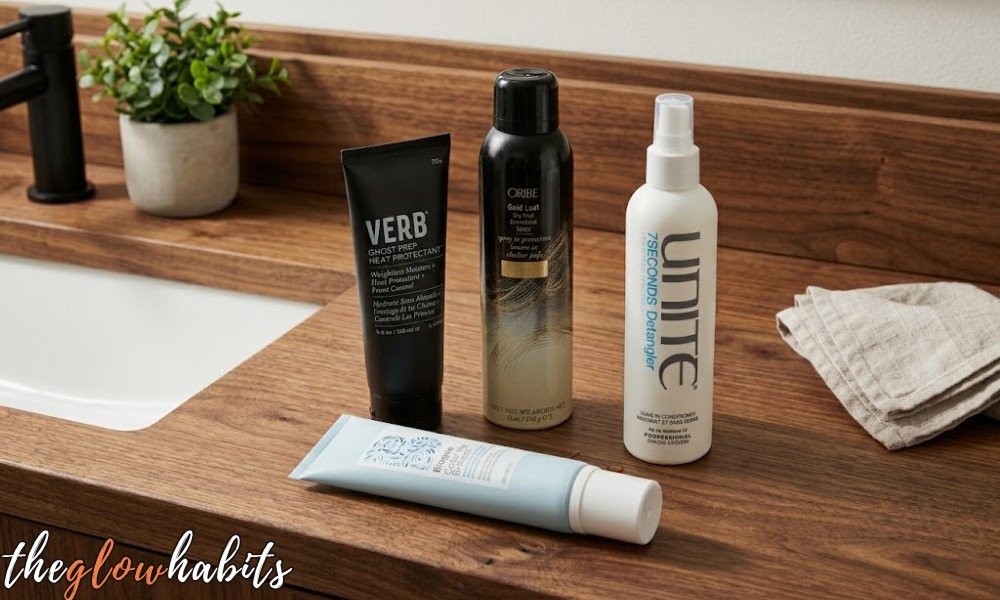
For something with a bit more finishing power, Oribe Dry Texturising Spray is a cult favourite for a reason. It adds volume to fine hair without making it feel weighed down or frizzy, and the mist sprays evenly without clogging, which matters if you’ve dealt with clogged nozzles on other aerosol products before. It comes with a higher price tag, but a little goes a long way, so one tends to last a while.
Mists like these are a good starting point if your main concern is keeping fine hair from feeling coated or heavy after protecting it.
Best Heat Protectant Creams for Fine Hair
If you’d rather work a product through your hair by hand instead of spraying, a cream formula can still work well for fine hair as long as you’re using the right amount and the right formula.
UNITE 7SECONDS Detangler Leave-In Conditioner is a strong pick if you want a multi-use product. It hydrates and conditions without weighing hair down, and it absorbs effortlessly enough that it doesn’t interfere with styling afterward, which isn’t always the case with heat protectant creams.
It also helps cut down on tangles throughout the day, which is a common frustration with fine hair, especially on windy days. For best results, apply it to wet or damp hair. If you already have a favourite from our roundup of leave-in conditioners for fine, straight hair, layering it under a light heat protectant is worth testing too.
VERB Ghost Primer is another solid option if you want something with a bit more shine payoff. It blends into hair easily, though on dry hair it can feel slightly crunchy if it isn’t worked through thoroughly; a quick brush-through afterward usually solves that. It also travels well, since it can be transferred into a smaller bottle without leaking.
Creams like these work best when applied sparingly and blended evenly; a little product spread thin tends to outperform a larger amount applied all at once.
Best Clean-Beauty Heat Protectants for Fine Hair
If clean beauty is a priority for you, there are a couple of standout options that don’t sacrifice performance for a cleaner ingredient list.
Dae Agave Dry Heat Protection and Hold Styling Mist is genuinely one of the lightest-feeling formulas out there; it holds curls all day while feeling like almost nothing is in your hair, which is exactly what fine hair needs. It has a fruity scent that’s noticeable without being overwhelming, and it adds a visible boost of shine, which makes it a strong pick if styling longevity is your main concern.
Briogeo Colour Me Brilliant Mushroom and Bamboo Colour Protect Primer stands out for protecting against both heat and colour fade at the same time, which is useful if you’re dealing with colour-treated fine hair including if you’re maintaining neutral blonde tones or trying to make highlights last longer between salon visits.
The scent leans earthy, and the pump can dispense more product than expected, so it’s worth using a light hand; a little goes further than it seems. Used carefully, it’s a formula that’s 97% naturally derived and vegan, without feeling like a compromise on results.
Clean-beauty formulas like these prove that a shorter ingredient list doesn’t have to mean giving up on lightweight performance for fine hair.
FAQ
Yes, fine hair isn’t more resistant to heat damage just because it’s thinner. If anything, choosing the right lightweight formula matters more, since heavy products will weigh it down faster than they would thicker hair.
Sprays and mists tend to work better for fine hair since they distribute more evenly without adding bulk. Creams can still work, but they need to be applied sparingly and blended thoroughly to avoid feeling heavy.
On damp hair before blow-drying, and on fully dry hair before using a flat iron or curling iron. Applying it at the wrong stage means you’re not getting even coverage.
Look for one rated up to at least 450°F, which covers most blow dryers, flat irons, and curling irons. Check your tool’s settings to make sure they don’t exceed what your product protects against.
It can, especially with heavier, non-water-soluble silicones that aren’t fully rinsed out over repeated use. If you notice your hair feeling weighed down over time, a silicone-free option or an occasional clarifying wash can help reset things.
Conclusion
Finding the right heat protectant for fine hair really comes down to weight. A formula that’s too heavy will undo any benefit it’s supposed to provide, no matter how well it performs on paper. Whether you land on a mist, a cream, or a clean-beauty formula, the goal is the same: real protection without the trade-offs of greasy, flat, or weighed-down hair.
Start with one that matches how you already style: spray if you reach for hot tools daily or cream if you prefer working product through by hand, and build your routine from there.