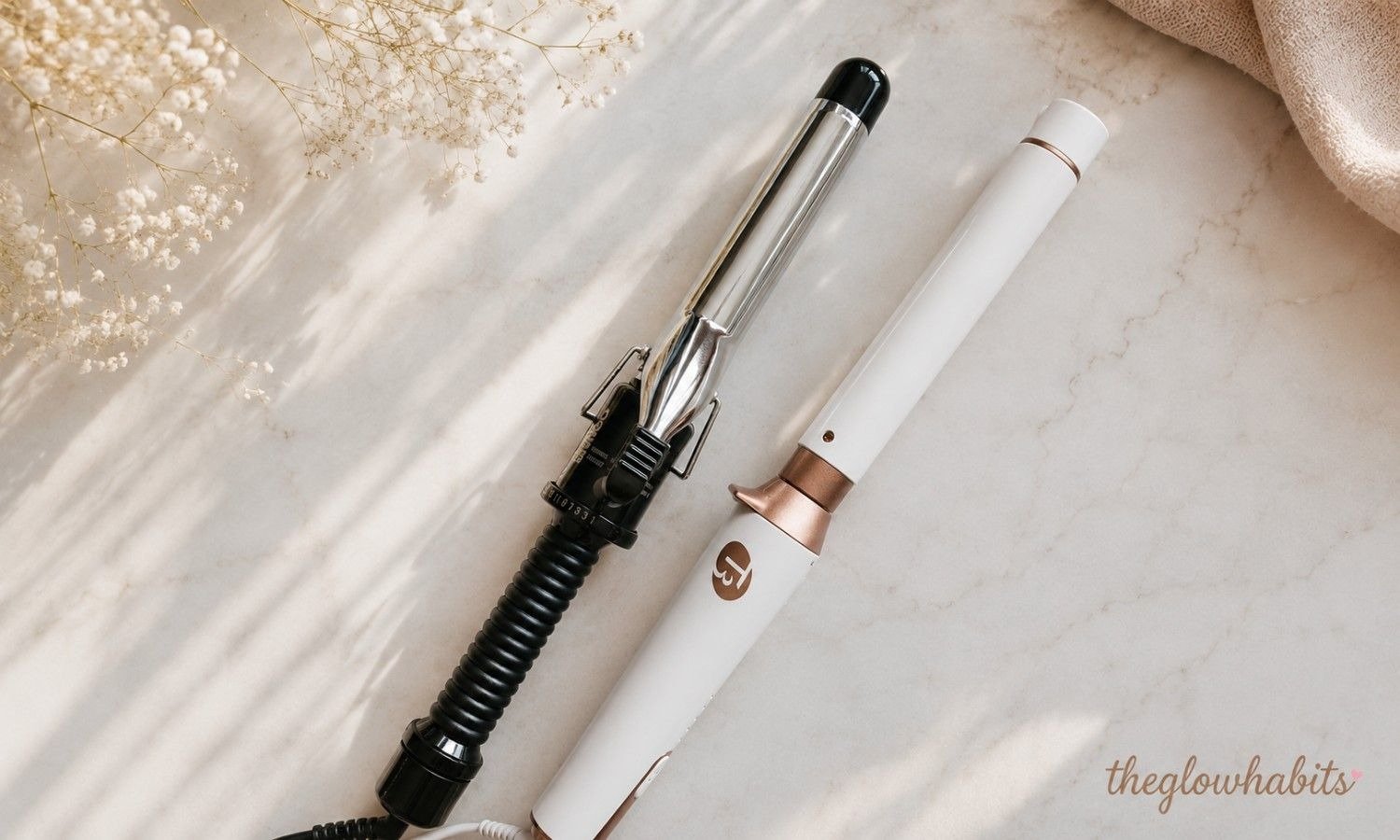
If you have fine or stick-straight hair, you already know the frustration: you spend all night prepping for an event, only to watch the curl fall flat by morning.
Finding the right tool isn’t as simple as it sounds. The market is flooded with curling irons: ceramic, titanium, tourmaline, and ionic, each promising beach waves and bouncy curls that last. It’s overwhelming, and not every claim holds up once you’re standing in front of a mirror with humid hair.
I spent about eight months testing irons before landing on what actually worked for my fine, straight hair, picking up favourites from Sephora and Target and a few through Amazon deals. I’ve also been reviewing hair tools for close to a decade, so I’ve seen plenty of trends come and go.
Not every “trend” survives contact with soft, fine hair, especially in humid conditions. I once bought a budget titanium iron that looked great on paper and let me down at exactly the wrong moment.
That’s what pushed me to actually study the specs instead of just the marketing: barrel material, temperature range, clamp design, and weight – the details most people skip past. The short version of what I learned: ceramic is the safer, more reliable default for fine hair, and titanium is worth using only if you keep the heat low and move fast.
Below is my full breakdown of the best curling irons for fine, straight hair in 2026, organised by budget, along with how to actually use one without frying your hair.
Best Curling Irons for Fine, Straight Hair in 2026
1. T3 SinglePass Curl X — Best Overall for Fine Hair
Price: $159.99 (available in 1″, 1.25″, and 1.5″ barrels)
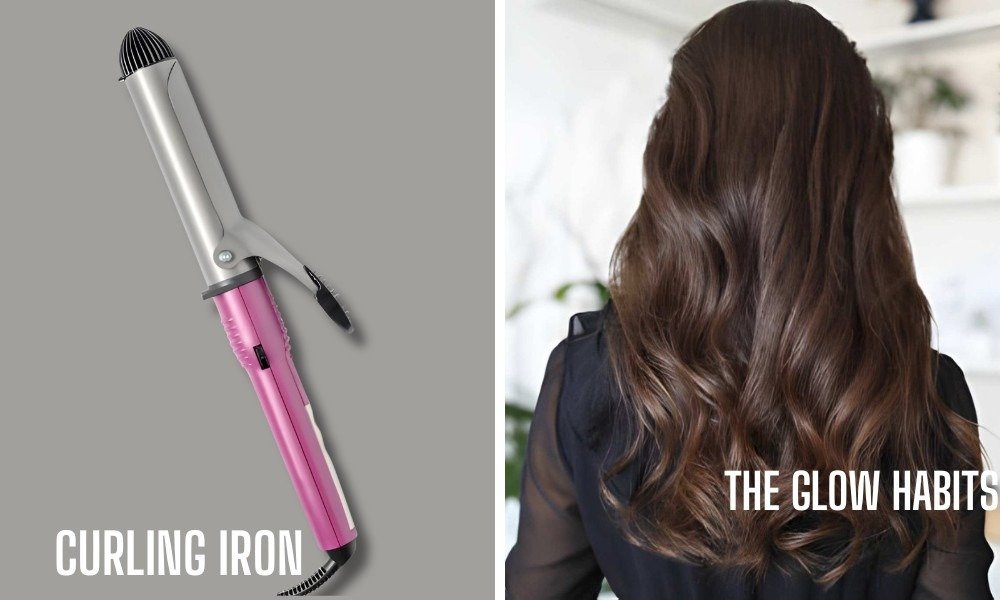
After a string of cheaper irons that snagged, overheated, or just didn’t hold a curl, I finally spent more and got the T3 SinglePass Curl X. It’s a ceramic iron built to last, without the coating wearing thin the way it does on budget picks.
For fine hair, ceramic is the smarter material overall, gentler on the strand and far more consistent than titanium. The negative ions the barrel releases help fight frizz, smooth the cuticle, and add shine. What really sets this iron apart is temperature consistency: no hot spots, which matters enormously when your hair can’t take repeated direct heat.
The extra-long barrel (available in three widths) gives you range, from tight, bouncy curls to soft, loose waves, and the nine heat settings mean you can actually dial in something appropriate for fine hair instead of guessing on a low/medium/high switch. It’s an investment, but for fine, straight hair, it’s the clearest winner in this roundup.
2. Bio Ionic Long Barrel Curling Iron: Best for Extra-Long or Thick-Fine Hair
Price: Around $150 – $165
This one consistently tops independent testing roundups for a reason: it pairs a ceramic-blend barrel with ionic technology that leaves hair shiny with minimal frizz, and it heats evenly enough to work across a wide range of hair types, including fine hair, without harsh hot spots. The barrel runs long (about 14.5 inches), which is a genuine advantage if your hair is fine but also long, since it lets you capture a full section in one pass instead of overlapping and adding extra heat exposure.
3. Conair Double Ceramic Curling Iron Best Budget Pick
Price: Around $20–25
If you want to test whether ceramic works for you before spending real money, this is where to start. It’s a genuine ceramic barrel (not titanium), so it distributes heat more evenly and gently than Conair’s titanium lineup. It won’t match the T3 or Bio Ionic on barrel consistency or longevity, but for the price, it’s a reasonable entry point and a much better fit for fine hair than a titanium iron at any price.
4. BaBylissPRO Nano Titanium Spring Curling Iron: Best Titanium Option (With Caveats)
Price: Under $80
If you specifically want titanium, this is the one to get instead of a generic drugstore titanium wand. Titanium heats up faster and runs hotter than ceramic, which is genuinely useful for thick or coarse hair but riskier for fine strands. If you go this route, stay on the lowest heat settings, keep your pastime short (5 seconds, not 10), and never skip a heat protectant. Fine hair already struggles to hold a curl; the last thing it needs is more heat than necessary.
5. L’ange Le Pirouette Rotating Curling Iron: Best for Beginners
Price: Around $60–70
Fine hair needs even tension to set properly, and that’s exactly where a lot of people go wrong. With a manual iron, uneven wrapping means uneven curls that fall out fast. This automatic rotating iron removes that guesswork: it wraps the hair and applies consistent tension for you, which is genuinely useful if you’re still building technique or your hair never seems to hold no matter what you try.
Ceramic vs. Titanium for Fine Hair: The Short Answer
This is the question that trips up most people shopping for a curling iron, so here’s the direct version:
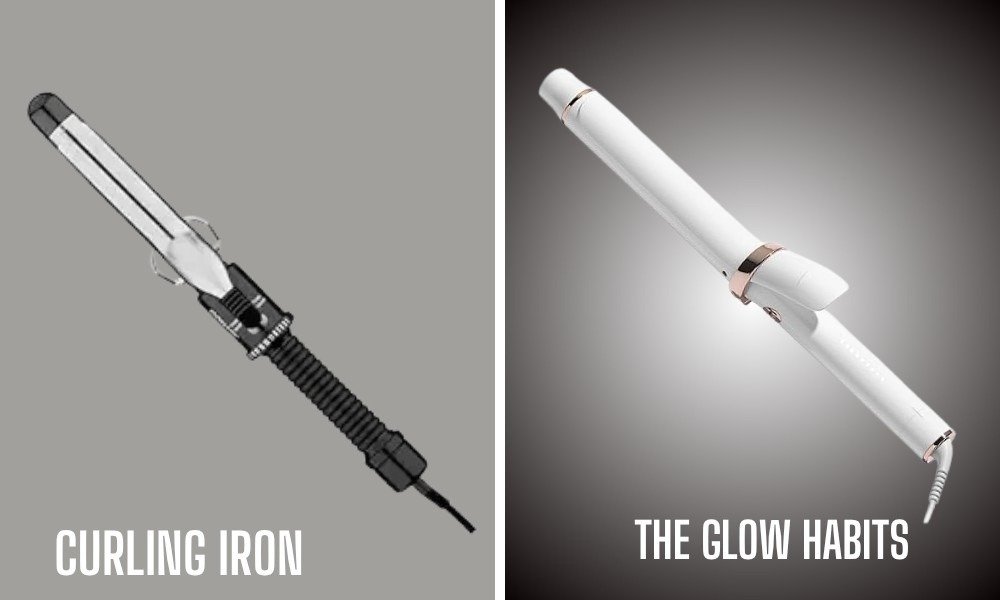
- Ceramic heats evenly and gently. It’s the safer default for fine, thin, colour-treated, or damage-prone hair, and it’s what most stylists recommend as a starting point.
- Titanium heats faster and hotter. It’s better suited to thick or coarse hair that resists curling. On fine hair, it can work, but only with low heat, and quick passes used carelessly accelerate the very thing fine hair struggles with (curl fallout and heat damage).
If you only remember one rule from this whole post, default to ceramic unless you have a specific reason not to.
How to Use a Curling Iron on Fine, Straight Hair
- Barrel size: A 1-inch barrel is a solid, versatile choice for most fine hair, even for beachy waves. Smaller barrels (¾”) hold curl longer on very fine or short hair; larger barrels (1.25″+) work better for loose waves on longer hair.
- Heat protectant: Apply before every single use. It’s the one non-negotiable step, and it also makes hair look smoother and shinier as a bonus.
- Heat settings:
- 250–300°F (120–150°C) for fine or damaged hair
- 300–350°F (150–175°C) for normal hair
- 350–400°F (175–200°C) for coarse or extra-thick hair
- Timing: Hold the wrap for 5–10 seconds, not longer. Fine hair sets quickly; extra time just adds heat exposure without adding hold.
- Let it cool: Resist the urge to touch or brush out curls immediately. Letting each curl cool fully before moving on noticeably extends how long it lasts.
FAQs
The best curling wand for fine hair has adjustable heat settings, a ceramic or tourmaline barrel, and a temperature range between 250°F and 350°F. These features help create long-lasting curls while minimising heat damage.
No curling iron is completely damage-free, but ceramic and tourmaline models with adjustable heat settings are gentler on the hair. Using a heat protectant and avoiding excessive temperatures also helps prevent damage.
A curling wand doesn’t have a clamp, allowing you to wrap hair around the barrel for a more natural look. A curling iron has a clamp that holds the hair in place, making it easier to create polished, uniform curls.
For fine hair, choose a curler with ceramic technology, adjustable heat, and a barrel size that matches your desired curl style. Lower heat settings help protect delicate strands while still producing lasting curls.
A curling iron with a ceramic or tourmaline coating, adjustable temperature control, and a barrel size between 1 and 1.25 inches is ideal for fine, thin hair because it distributes heat evenly without excessive damage.
Yes, but it’s important to use the lowest effective heat setting, apply a heat protectant, and limit styling frequency. Choosing a high-quality ceramic curling iron can also reduce heat stress.
A curling iron with a clamp is often better for beginners because it securely holds the hair while styling. Curling wands are better for creating loose, beachy waves with a more natural finish.
A curling iron with a smaller barrel around ¾ inch to 1 inch is typically best for short, fine hair because it allows better control and creates curls that hold longer.
Start with dry hair, use a heat protectant, curl small sections, let each curl cool before brushing, and finish with a lightweight hairspray or texturising spray for longer-lasting results.
A 1-inch barrel is the most versatile choice for fine hair. Smaller barrels create tighter curls with better hold, while larger barrels produce softer waves.
No. Fine hair usually curls best at temperatures between 250°F and 325°F. Higher heat can increase the risk of dryness, breakage, and long-term damage.
Yes. Ceramic curling irons distribute heat more evenly and are generally gentler, making them a better choice for fine or fragile hair. Titanium models are better suited to thick, coarse, or hard-to-curl hair.
Conclusion
For fine, straight hair, ceramic beats titanium almost every time; it heats evenly and won’t fry delicate strands. The T3 SinglePass Curl X is my top pick overall, but the Conair Double Ceramic proves you don’t need to spend big to get good results. Whatever iron you choose, a heat protectant, the right barrel size, and letting curls cool before touching them will matter just as much as the tool itself.