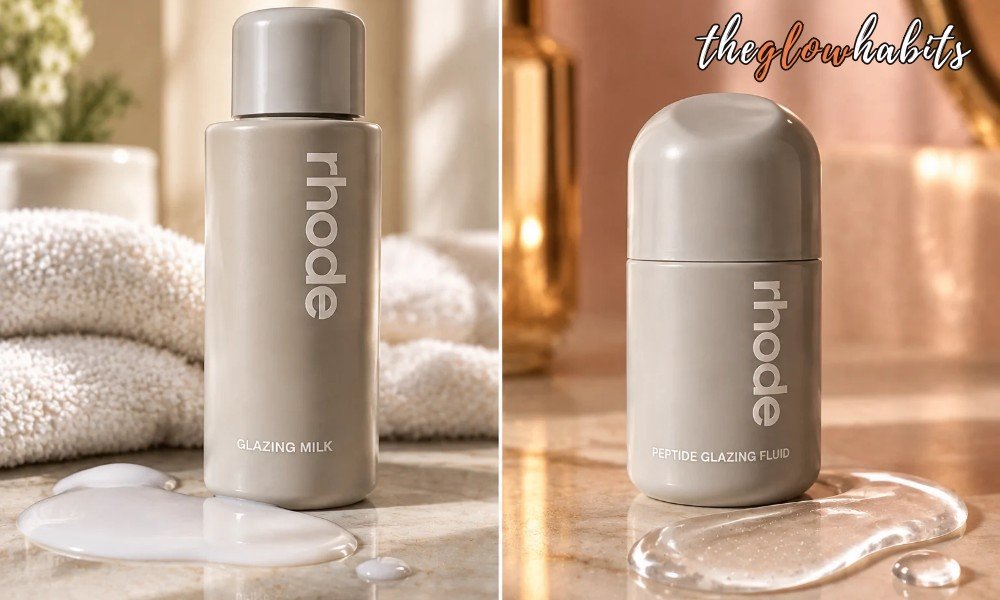
Glazing Milk vs. Peptide Glazing Fluid
Peptide Glazing Fluid and Glazing Milk sound extremely similar, but these two glaze products have different roles. Rhode describes the fluid as a dewy gel serum and the milk as a milky essence that helps calm skin. www.rhodeskin.com
The clear differentiation is in the order: I would use milk first for a deeply hydrated, glowy base, then fluid for the glazed finish, as Rhode recommends. www.rhodeskin.com That distinction is lacking in the names. If you are wondering which is better, I would buy both only if I wanted a prep step and a separate serum.
Rhode and Celebrity Skincare
Rhode entered a market crowded with the newest celebrity-backed skincare brands. It was founded by Hailey Bieber. investor.elfbeauty.com To me, the genius of its marketing was advertising her glazed donut skin while introducing the brand to the world; Vogue reports that Bieber had popularized the look. www.vogue.com
Fenty and Rare have upped the stakes for celebrity brands in my eyes, so I hesitate to dismiss a launch as a cash-grab. These formulas seem legitimately worth trying when their different purposes fit the routine you want.
Glazing Milk vs. Peptide Glazing Fluid
In a Rhode skincare product comparison, I ask what the difference between glazing milk and peptide glazing fluid is. Both products look extremely similar, but the milk has a toner-like, creamy, milky texture and is the essential prep step that goes on first.
Rhode lists calming and soothing skin, reducing the appearance of redness, and supporting barrier repair among its benefits. www.rhodeskin.com The Fluid is a gel-serum hydration layer that goes on next to visibly plump, hydrated and brightened, leaving a dewy glaze and the brand’s signature glazed finish. www.rhodeskin.com That is how they are different: the Milk makes skin feel cushiony-soft and supple, while the Fluid follows in the layering order. www.rhodeskin.com
Skin Needs and First Impressions
With dry, sensitive skin, I care about product absorption and barrier comfort; repairing that barrier matters more to me than a flashy finish. Purchasing both seemed excessive, but I was eager to try them.
My first impressions centered on texture and application: the Fluid’s pump dispenser versus pouring the Milk from its bottle. www.rhodeskin.com I pour the Milk into my hands before applying it to my face, neck, and chest; both products appeared white, then turned clear as I worked them into the skin. When I think about a repeat purchase, which is better for me depends on whether I want a soft prep layer or a brighter finish.
Rhode Glazing Milk Review
Makeup Wear and Skin Results
Rhode Glazing Milk worked best for me as a pre-makeup skincare step and a primer, not a deep treatment. www.rhodeskin.com My first impression was the immediate glow: a dewy, glazed donut, a no-makeup look with the ultra-hydrated appearance. I associate with Hailey Bieber. www.vogue.com
On my face, the product created a beautifully hydrated, smooth surface, minimizing dry patches and providing an ideal base for makeup, especially liquid and gel formulas. Can you apply powder directly after it? Powder products appeared cakey on my skin, making the product less suitable for use under a powder finish. Those thoughtful ingredients matter, but this beauty review is about what I could see and feel.
Skin Feel Over Time
So how does it work for dry, sensitive skin over time? Rhode says the fragrance-free Milk can calm and soothe, improve hydration, reduce the appearance of redness, and boost or repair the skin barrier. www.rhodeskin.com
The finish felt calming and soothing, but my redness did not improve; the claim about reducing it did not match my experience. My hydrating vitamin C oil had trouble absorbing after I tried layering it over the milk; it made me question its promise to prep the skin for better product absorption. www.vogue.com Even after working with the product, I could not judge its penetration or tell whether it was penetrating deeply; I saw no deep change or long-term changes to my barrier.
Scent and Irritation
It did not cause irritation or breakouts, and it did not break me out. I noticed a chemical scent, a chemical-like odor close to Elmer’s glue, despite the omitted fragrance. You can smell it without added perfume; fragrance seems unnecessary to me and is typically irritating for my sensitive skin. The American Academy of Dermatology notes that added scents can irritate sensitive skin.
rhode glazing milk dupes
So what are the Rhode Glazing Milk dupes? For milky toner alternatives, BYOMA Hydrating Milky Toner, which costs $14.99, and The Ordinary Saccharomyces Ferment 30% Milky Toner, with a $14.00 regular price, are two options to compare. byoma.com
My old dupe prices also list Rephr balancing essence 1.0 at $30.00; I cannot verify it as a current offer on the brand’s site.
How to apply Rhode glazing milk
If you wonder how often you should use Rhode Glazing Milk, the brand website offers simple guidance: apply it to your face morning and night, after cleansing and before the rest of your skincare routine steps. The brand says it is safe before serums such as Vitamin C serum or retinol. www.rhodeskin.com
Body Application and Cost
Can you use it for body application? Rhode has shown an all-over glistening hydration effect, but I would avoid full-body use. www.rhodeskin.com
At the $30 per bottle figure in my older notes, the cost effectiveness was not convincing; the current large bottle costs $32. www.rhodeskin.com It is not an effective way to replace a moisturizer for deep skin hydration. For more moisturizing alternatives, a hydrating oil or coconut oil melt makes sense to me.
On special occasions, the whole-body glow may be worth it, though potential clothing transfer is my concern: will it leave marks on your clothes?
Rhode Peptide Glazing Fluid Review
Texture, Skin Feel, and Pump
In this review, I start with the comparison that mattered to me: how does Rhode Peptide Glazing Fluid compare with Glazing Milk? Rhode describes it as a gel serum meant to plump and hydrate skin for a dewy, glazed finish; to my fingers, its texture feels gel-like. www.rhodeskin.com Versus Milk, it gave me a subtle glaze and less of a super glowy look. I noticed surface hydration and a hydrating, moisturizer-like feel; my skin looked hydrated, but nothing special.
Still, the gel had a soothing, almost cooling sensation, and it made a good makeup base under foundation when I had dry patches. The sticky feel was harder to ignore: persistent stickiness fades over time but does not fully fade, and I noticed fading without the tackiness disappearing. Its chemical scent was less noticeable than Milk’s, so scent-sensitive readers may prefer it.
Niacinamide and Sensitive Skin
Do you have sensitive skin, and is niacinamide suitable for you? Does the product contain niacinamide? Yes. Rhode lists that ingredient and notes it can be sensitizing to some; if niacinamide tends to irritate your skin, it can cause a reaction, so the sensitivity risk is worth considering. www.rhodeskin.com I experienced no irritation, purging, or breakouts; it did not break me out.
Pump and Customer Service
My preference is a sanitary pump, but the packaging I received had a faulty pump. I asked customer service for a replacement or troubleshooting advice; their answer for application was to apply the serum directly to your hands, which felt unsatisfying. What if it fails again—will customer service replace it? I had considered repurchasing, but that experience settled my purchase decision: I would not repurchase.
Rhode Peptide Glazing Fluid
Rhode peptide glazing fluid dupes
What are Rhode Peptide Glazing Fluid dupes? These alternative serums and moisturizers serve different parts of a dewy skincare routine.
The supplied dupe prices list Glow Recipe Watermelon Glow Niacinamide Dew Drops Serum at $49.00, though Glow Recipe currently shows $36.
Summer Fridays Cloud Dew Gel Cream Moisturizer is the option which costs $38.00.
The supplied list prices Tata Harper Water-Lock Refillable Moisturizer with Skin-Smoothing Peptides and Hyaluronic Acid at $72.00; its current product page shows $74.
How to apply Rhode peptide glazing fluid
How many pumps of Rhode Peptide Glazing Fluid should you apply? The 1-2 pumps in the earlier notes differ from the Rhode website’s current guidance: Use 2–3 pumps on your face after morning or evening cleansing, then follow up with moisturizer. If toning is part of your AM or PM skincare routine, do it before the Fluid.
For makeup, I like to mix it with foundation for a dewy look and a nice finish. But powder application was less forgiving: setting my T-zone gave it a cakey appearance. Does powder work over it? In my experience, it had a poor response there, so I would use a light hand when setting your foundation.
Rhode Glazing Milk vs Peptide Glazing Fluid
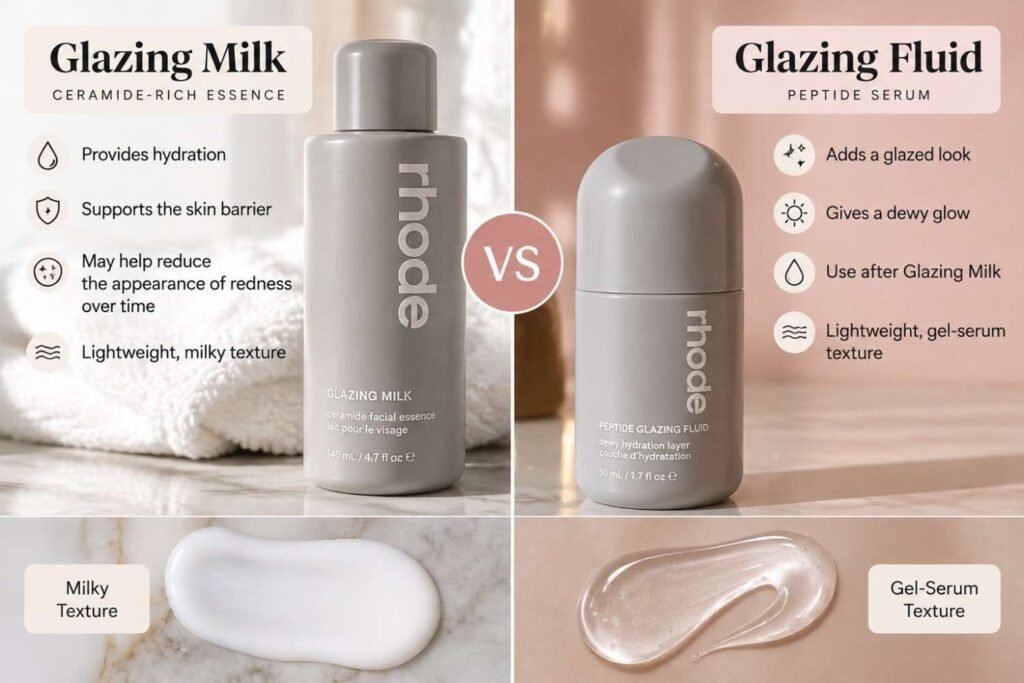
Rhode glazing milk vs peptide glazing fluid comparison
The Peptide Glazing Fluid gave my skin a subtle, non-glittery glow and made a great base underneath makeup, especially under liquid products, although it is not designed as a makeup base. It felt more calming than Glazing Milk, but neither product soothed redness. I cannot claim either formula will soothe everyone’s skin; I can only say the fluid calms mine.
Rhode describes the fluid as a hydrating serum, yet milk felt more hydrating to me. That claim did not match my experience.
Which product is better? My glazing milk recommendation is for the fuller glazed donut look; you do not need both extremely similar products in your skincare routine. Both gave me glow without glitter, and their published ingredient lists do not appear to contain silicones.
packaging
The sleek packaging looks good on display on a counter, but the Fluid’s faulty pump was not working and would not work for me. Milk’s twist-top lid lets me apply it directly to my hands. I did no leak test when traveling with it; I stored it laying down in a bathroom drawer, with no problems in storage.
price and availability
For value for money, compare the same $32 retail price: how much does each product get you? The earlier 4.7oz figure for Glazing Milk in my notes does not match its current 4.2 oz size; Peptide Glazing Fluid is 1.7oz.
Milk has a runnier consistency, so I would not call either one the cheaper or more cost effective option. Is it worth buying both? $32 seems fairly priced for skincare, but the order hassle was real: my purchase directly from the Rhode website took a week and a half for delivery.
How long does an order take now, and how much must you spend to get free shipping? Rhode’s threshold is $45 for most U.S. addresses.
Where can you buy these products? The old statement that you must buy directly from Rhode, with no discounts or loyalty points on offer, is outdated. Sephora now sells both alongside comparable products at various price points and offers members faster standard shipping and loyalty benefits.
What Works for Dry Skin in Winter?
How does glazing fluid compare to glazing milk for horribly dry skin? Rhode describes the milk as a ceramide essence for hydration and the fluid as a gel serum that adds a glazed look. Its suggested order is milk, then fluid, then moisturizer. Rhode’s product guide www.rhodeskin.com
If you guys like the milk for everyday use, that is the useful comparison: the fluid adds a more visible glow to the routine you already have.
If that glow doesn’t last as long during the winter months, I would pay attention to how your skin feels later in the day as well as how it looks at first. Does the fluid versus milk make a difference to the finish, or is extra hydration what you need?
For daily use on very dry skin, the American Academy of Dermatology recommends a cream or ointment. That is the moisturizing step to consider when judging lasting power.
Which product is worth buying?
If I am on a budget, what are the budget-friendly alternatives? The dupes are worth trying if you want a similar look for less.
Do either of these Rhode products give noticeable results? Neither product gave me out-of-this-world results, and my skin did not particularly benefit. Will I miss them if I stop using them? When I removed the products from my skincare routine, I did not; their absence showed how limited the benefits were.
Which Rhode product should I buy if I choose only one? Glazing Milk is the clear winner for me, and I recommend trying it.
Where can you shop? Sephora has it; buying at Sephora may be the better choice if you value VIB points and perks, free shipping for members, and its return policies.
Does the store offer better customer service? In my experience, yes. You can also buy directly from the Rhode website, depending on availability.
Glazing Milk vs Peptide Glazing Fluid FAQs
Milk is a milky essence used first, after cleansing. Fluid is a gel serum used next for a glazed finish. I found Milk more hydrating, even though Rhode markets Fluid as the hydrating step.
Not really. They’re similar enough that I’d pick just one. If I had to choose, it’s Glazing Milk.
Rhode claims both, but I didn’t see it. My redness didn’t improve with either product.
No breakouts or irritation for me with either. Milk had a faint chemical scent despite being fragrance-free.
Both work fine under liquid or gel products, but neither holds up well under powder — my T-zone looked cakey.
Milk. It felt more hydrating and cushiony. Fluid had a tackiness that faded but never fully went away.
Not convincingly, in my experience. Neither gave dramatic results, and I didn’t miss them when I stopped using them.
Yes—BYOMA or The Ordinary for Milk, and Glow Recipe, Summer Fridays, or Tata Harper for Fluid. Check current prices before buying.
Sephora, for faster shipping and loyalty perks. My direct Rhode order took a week and a half.
Final Verdict
I don’t think you need both. Glazing Milk is my pick—more hydrating, easier to apply, and a fuller glazed look. Peptide Glazing Fluid felt subtler and stayed slightly tacky, and my bottle arrived with a faulty pump; customer service didn’t really fix it. Neither delivered on redness or barrier claims for me, and I didn’t miss either after stopping. If you want to try the look for less, the dupes are a solid starting point.
Since this verdict differs from your other two reviews (which were more positive on both products), I’d still suggest reconciling that before publishing all three, or adding a line noting results vary by routine and skin type.

