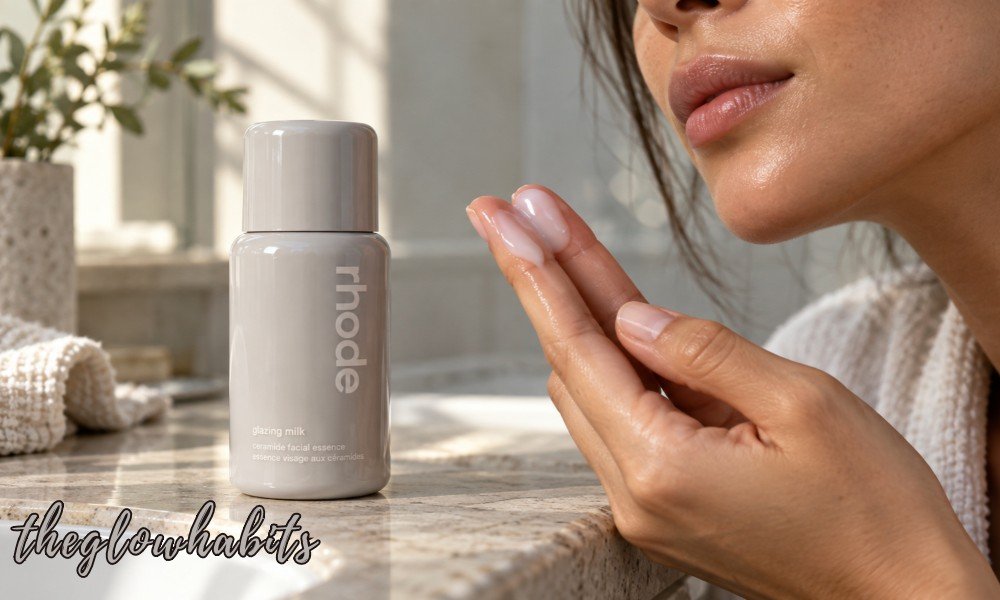
Is Rhode Glazing Milk worth it? Yes, if you want a light, dewy prep layer under makeup, skip it if you need a moisturiser replacement or dislike a briefly tacky finish.
The promise of glazed skin is easy to sell in a photograph. The harder question is whether the bottle earns a place beside products you already use. I kept coming back to Rhode Glazing Milk for the quiet things: my dry patches looked less obvious, foundation sat more comfortably, and my face had a soft sheen without feeling coated. The catch was a short, tacky phase after application. If your routine is already doing all of that, this may be a lovely extra rather than a necessity.
My notes in the supplied draft describe combination skin, dryness around the nose and chin, twice-daily use for a few weeks, and continued use over months. They are personal observations, not a controlled trial. Here is what I would want to know before spending money on it.
| At a glance | My take |
| What it is | A fragrance-free, milky ceramide facial essence used after cleansing. |
| Best reason to buy | A comfortable hydration layer and dewy makeup prep. |
| Main drawback | A little tackiness at first; it adds a step and does not replace a rich moisturizer for dry skin. |
| Best fit | Someone who likes a lightweight glow and can use another moisturizer if needed. |
| US price checked September 2026 | $32 for 4.2 oz; $20 for the 1.7 oz mini on Rhode’s product page. Prices may change. |
What is Rhode Glazing Milk?
Rhode calls Glazing Milk a ceramide facial essence. It goes on after cleansing and before serums or moisturiser. Picture the comfort of a milky lotion in a more fluid layer: its job is to leave skin feeling hydrated and looking softly dewy, not to act as a cleanser, sunscreen, or treatment for a skin condition.
The ingredient list has a sensible moisture story. Ceramides NP, AP, and EOP are barrier lipids; glycerine and several forms of sodium hyaluronate help attract water; and beta-glucan is also in the formula. Rhode highlights a mineral complex and vitamin E. The product is listed as fragrance-free. Those details explain why the formula is aimed at hydration and barrier support, but an ingredient list alone cannot predict whether it will suit your skin. Rhode’s full ingredients and directions are the best reference if you avoid a specific ingredient.
Rhode also says it can reduce the appearance of redness over time. That is a cosmetic claim, not a promise to treat persistent redness. I noticed calmer-looking cheeks in my own routine, but I cannot isolate the milk from everything else I used.
Texture, glow, and the small catch
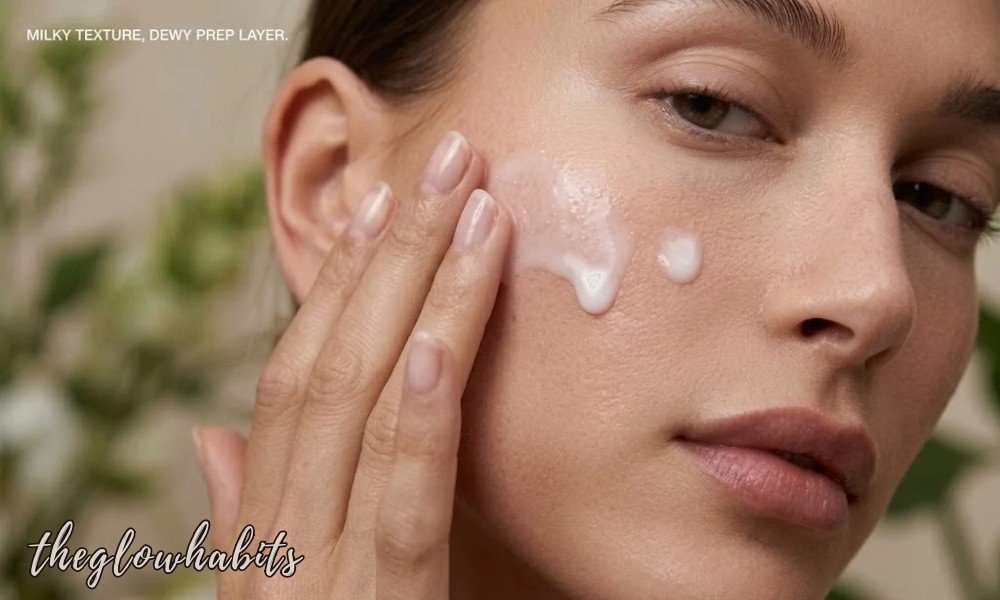
The first press feels more substantial than a watery toner. It spreads quickly and leaves a fresh sheen rather than the thick slip of a cream. I liked the way it took the papery look out of the skin around my nose and chin. That is the kind of difference I notice in ordinary daylight, when there is nowhere for a highlighter to hide.
It is briefly tacky on me. Give it a moment before the next layer and the finish settles. I would not call it weightless or completely non-sticky just to make the review sound cleaner. On days when my skin already feels balanced, I sometimes want one fewer step; on dry mornings, that extra cushion feels worthwhile.
After a few weeks, the draft notes describe fewer visible dry patches and cheeks that looked less red. I can report those changes as my experience, but I would not attribute improved serum absorption, long-term oil control, or better tolerance of tretinoin to this essence without a more careful comparison. The instant glow is easier to judge than a long-term barrier claim.
Does Rhode Glazing Milk work under makeup?
This is where I understand the appeal. Applying a thin layer before moisturiser and SPF helped my foundation glide on more smoothly without clinging to dry patches. I did not notice obvious slipping or pilling in the routine described in my notes. Your sunscreen, foundation, amount of product, and weather can change that result.
Rhode suggests mixing it with foundation for a dewy finish. I’d test it as a separate step in your skincare routine first to see how it works on its own. If you mix it with a complexion product later, make a small amount on the back of your hand and check the wear before relying on it for a long day. Keep sunscreen as its own properly applied step.
How to Use It and Add It to Your Routine
Shake the bottle. After cleansing, press the milk onto your face and neck; Rhode also suggests the décolleté. Follow with your serum if you use one, then moisturiser and morning SPF. Rhode’s own suggested pairing is glazing milk before peptide glazing fluid, then barrier restore cream or barrier butter. You can use the milk in the morning or evening.
Glazing Milk vs. Peptide Glazing Fluid: Milk is the milky essence and first post-cleanse prep step. Fluid is a gel serum layered afterwards for more visible dewiness. Both products can work well together, but you don’t need to buy both to see whether one benefits your routine.
If your skin is sensitive, add new products to your routine one at a time. The American Academy of Dermatology’s guide to testing skincare products explains how to check a product before using it on your entire face. Fragrance-free does not mean irritation is impossible.
Who Should Try It and Who Can Skip It?
I would point someone toward Glazing Milk if they want a light hydration layer, dislike the feel of a heavy cream beneath makeup, or enjoy a soft glow on makeup-free days. It may be especially satisfying when dehydration makes foundation catch around the nose or chin. Rhode says it is suitable for all skin types, but suitability on a label cannot replace your own tolerance test.
I would pause if your skin is very dry and you expect this alone to seal in moisture. A moisturiser still matters in my routine. Oily or congestion-prone readers may prefer to start with a small amount and decide whether another layer is useful. If it stings, increases congestion, or leaves a finish you dislike, the glow is not a reason to keep using it.
Price and value: is the bottle worth $32?
At the US prices checked in September 2026, the 4.2 oz bottle is $32 and the 1.7 oz mini is $20. The mini costs more per ounce, but its lower upfront price makes sense if you want to test the texture and finish first. Sephora also lists the product; compare the current checkout price and availability where you live.
My answer to “worth it” is conditional. If it makes your existing moisturiser and makeup routine feel better, $32 can be reasonable for an essence you reach for often. If your current serum already leaves you comfortable and dewy, buying another bottle for the same job is hard to justify. I would not use a competitor’s stale price or a bottle-size rumour to make this look like a better deal.
Final verdict
I began to be sceptical of the celebrity skincare glow. The part that won me over was less dramatic: on dry mornings, Glazing Milk made my face feel comfortable and gave makeup a smoother-looking start. It is a pleasure to use, with a fleeting, tacky stage and a real limit on how much moisture it can provide alone. I would buy it again for that light, dewy prep; I would keep my moisturiser.
An original way to decide whether a milky essence earns its step
The question I would ask is not “Does it make me glow in a mirror?” Almost anything freshly applied can do that. Ask whether the skin around your nose and chin still looks comfortable at lunch, once the initial sheen has faded. That is where a prep layer can prove its value in an ordinary day and where a pretty first impression may fall apart.
If you already own a hydrating serum, try a simple three-morning comparison before buying a second full-size bottle: keep your cleanser, moisturiser, SPF, and foundation the same; use the milk on one morning and skip it on another; repeat the more convincing routine on day three. Note the feel after ten minutes and the look of dry patches or makeup at midday in the same light. This is a practical shopping check, not a clinical test, but it answers your question more honestly than a universal “must-have”.
The mini also changes the value calculation. At the current US list prices, the full bottle is about $7.62 per ounce ($32 ÷ 4.2), while the mini is about $11.76 per ounce ($20 ÷ 1.7). The large bottle offers more volume for the money; the small one buys you a cheaper experiment. Choose based on uncertainty, not simply on which price tag looks lower.
Rhode Glazing Milk FAQs
On my combination skin, it sometimes feels like enough on lighter days, but I wouldn’t rely on it to replace my regular moisturiser. Dry skin generally needs a separate moisturiser, and this essence is meant to be a prep layer.
Shake it, press it onto skin after cleansing, then apply any serums, moisturizer, and morning SPF. Rhode places peptide glazing fluid after the milk.
I didn’t experience any pillering with the routine in my notes, but results can vary depending on your sunscreen and foundation. Let each layer absorb before applying the next, and test the products you use together.
Its light texture may appeal to oily skin, but acne-prone skin can react differently to any new product. Start with a small amount, introduce it alone, and stop if it irritates or congests your skin.
Glazing Milk is a milky essence used just after cleansing for hydrated prep. Peptide Glazing Fluid is a gel serum used after the milk for an extra dewy finish.
Rhode says it can reduce the appearance of redness over time. My cheeks looked calmer after a few weeks, but that personal observation does not show that the milk treats the cause of redness.
Maybe not. If your serum already gives you comfortable skin and makeup that sits well, compare both routines before adding another step. The milk is useful when it solves a specific dryness or prep problem for you.
Conclusion: Is Rhode Glazing Milk Worth It?
Rhode Glazing Milk earned its place in my routine in a quiet way. The dry areas around my nose and chin looked less obvious, the foundation had a smoother-looking start, and my skin had a soft glow without feeling weighed down. I still notice a little tackiness while it settles, and I still reach for moisturiser when my skin needs more.
Would I buy it again? Yes. If makeup catches on your dry patches, the mini is a sensible way to see whether it makes a difference for you. If your current serum already leaves your skin comfortable and dewy, you can skip the extra step. The glow caught my eye; the everyday comfort is what kept me using it.

